
In my last post I shared the story of Kitchener’s first drinking water system. Today I’d like to share Waterloo’s.
It’s the late 1800s. The Town of Waterloo – with a population of less than 3000 – is in need of a water system and must make the decision of how to supply water to the community. Waterloo voters reject a proposal of municipal ownership of the water works – a new idea at the time.
In 1889 the town signs a 10-year contract with Waterloo Water Works – a private company – to supply water to the community. The Waterloo Water Works company hires the Berlin Waterworks company to supply Waterloo with water.
From 1889 to 1899, the municipal water supply for Waterloo is piped from Shoemaker Pond in Berlin (now Lakeside Park in Kitchener). This water is not always of good quality, to say the least.
In April 1899, the poor quality of the water supply influences the passing of a bylaw for a municipal water works. This prompts the construction of the William Street Pumping Station and three drinking water wells funded through a debenture of $40,000. A small, open reservoir connected to the three underground reservoirs handles any overflow. The open reservoir also served as a decorative feature and often included fish.
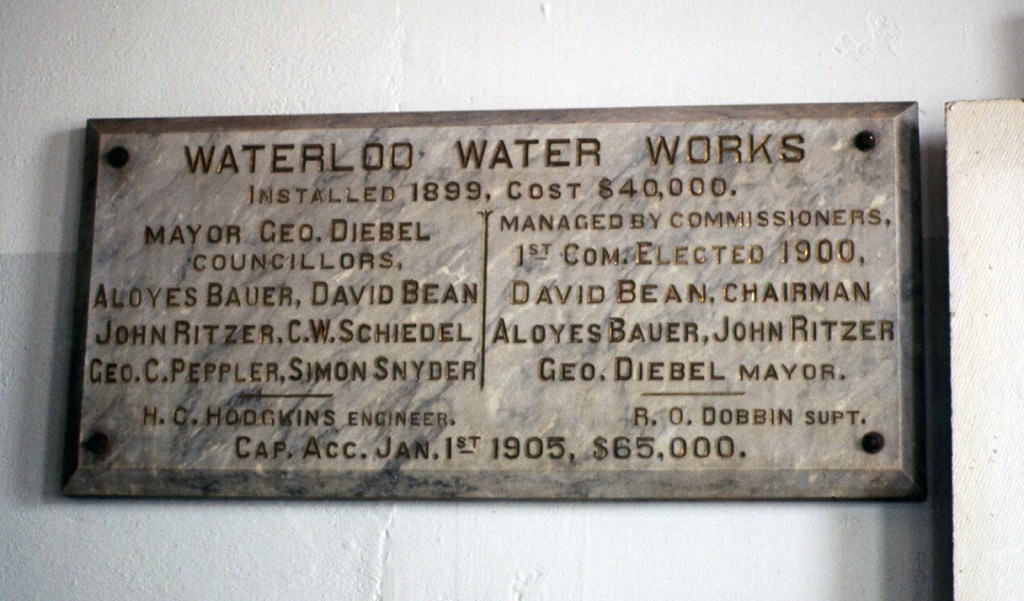
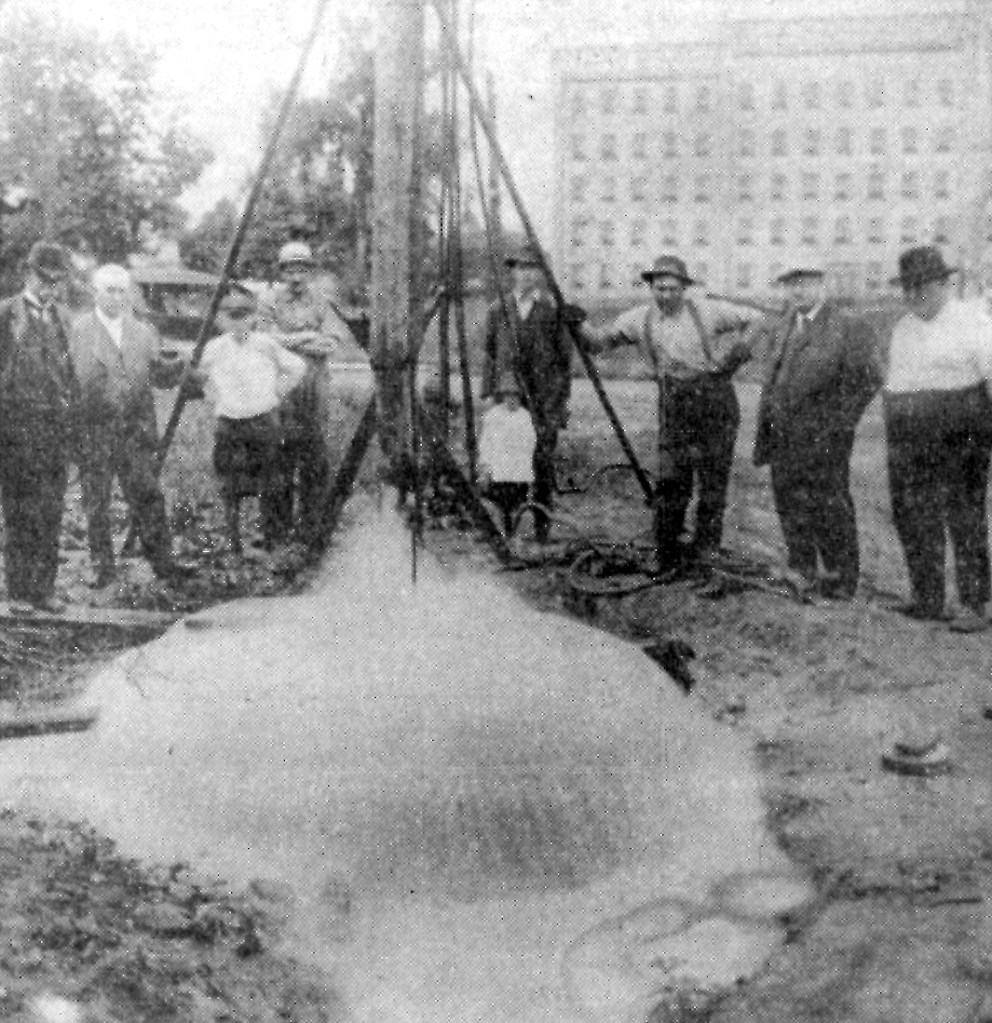
The wells that operate today were constructed in the 1940s and 1950s. They are about 35 metres deep and extract groundwater from a sand and gravel aquifer which is at the edge of the Waterloo Moraine. One reservoir with a 2.3 million litre capacity is located on the north end of the property.
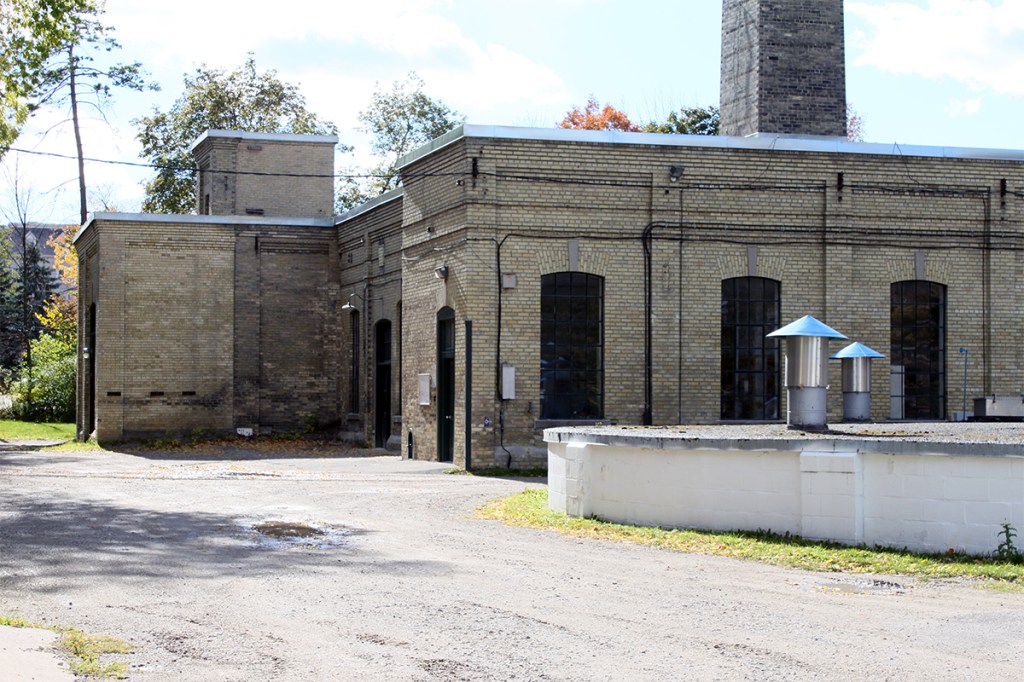
The William Street property is shared with Waterloo North Hydro. In 1910, the town’s Water Commission became the Water and Light Commission and in 1928, became the Public Utilities Commission. Unlike the water utility, the power utility was later privatized as Waterloo North Hydro.
During the early days of the Water Commission, the chief operator lived in one of the homes behind the William Street Pumping Station. The operator had to live nearby in order to be available to fix problems and to keep the pumping station operational.
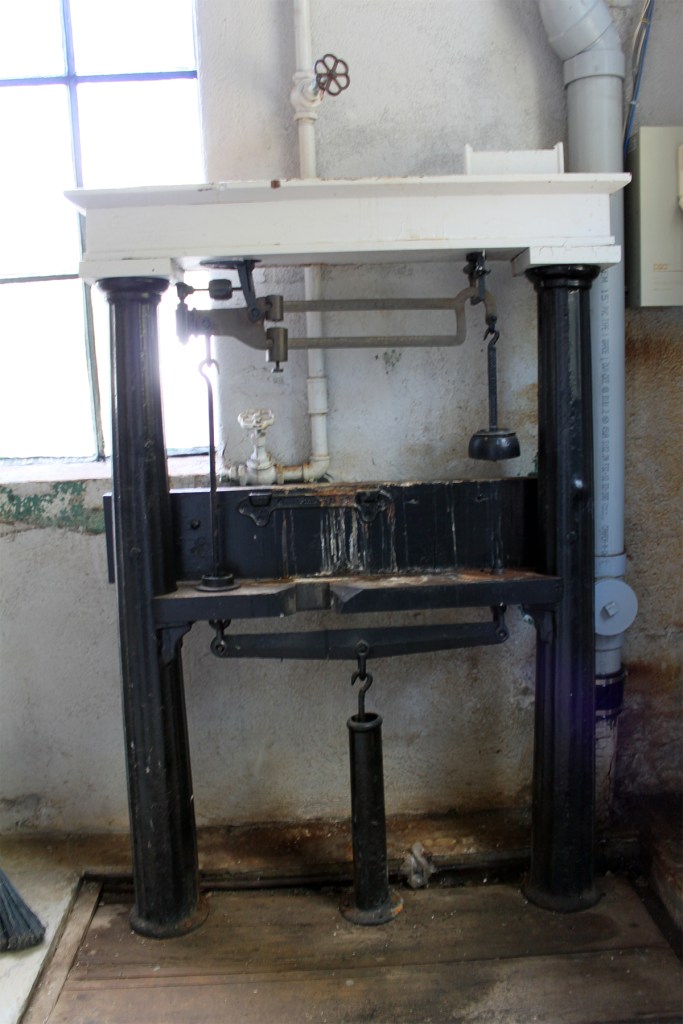
A diesel generator fuelled with coal was used to power the pumping station and also was a backup source of power for the nearby Waterloo Threshing plant. After electricity was connected, the diesel generator was used as an emergency backup power source. The last time the generator was used was July 1989. The generator and a wall board with the custom tools once used to maintain the generator and other machines still exists.
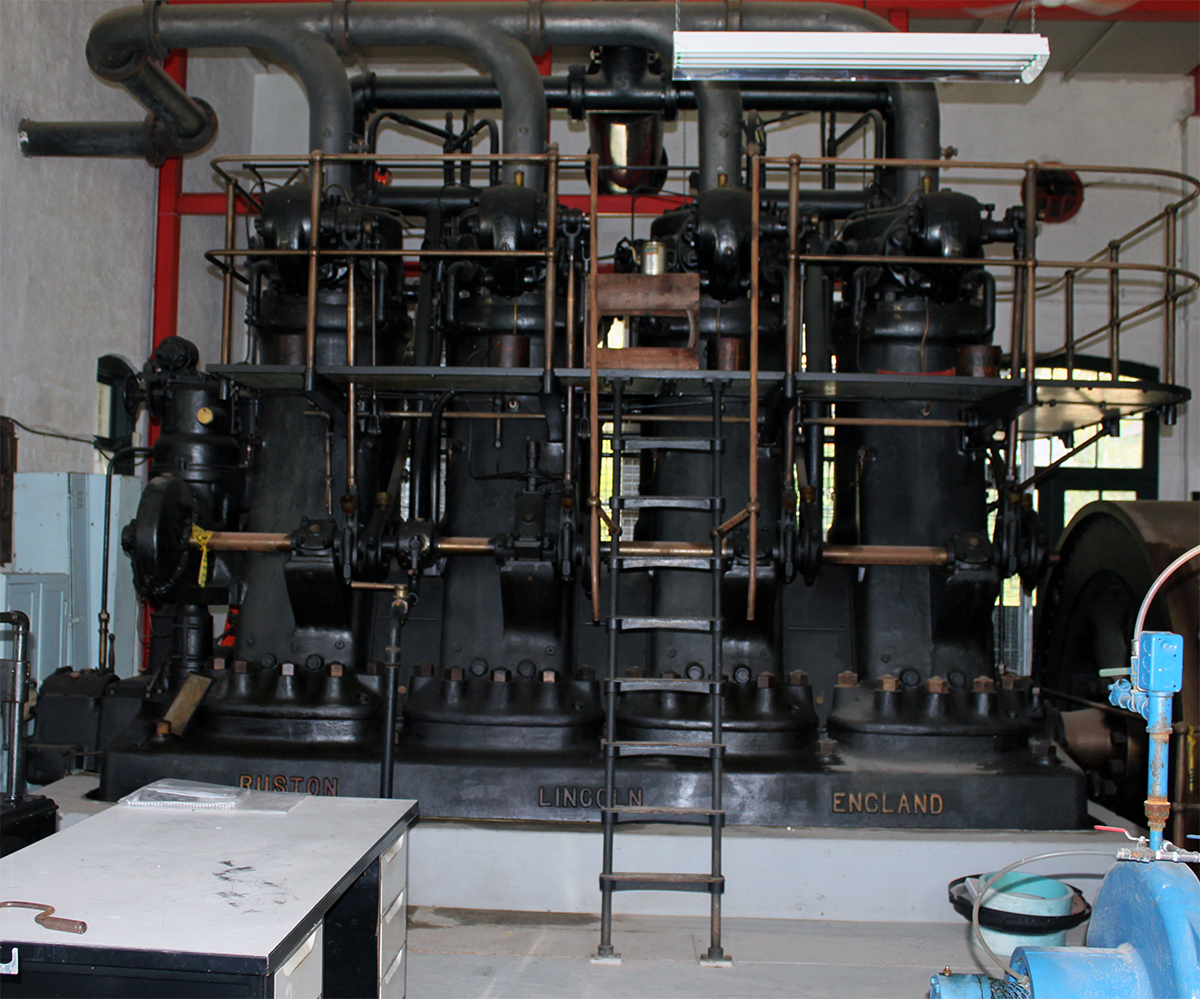
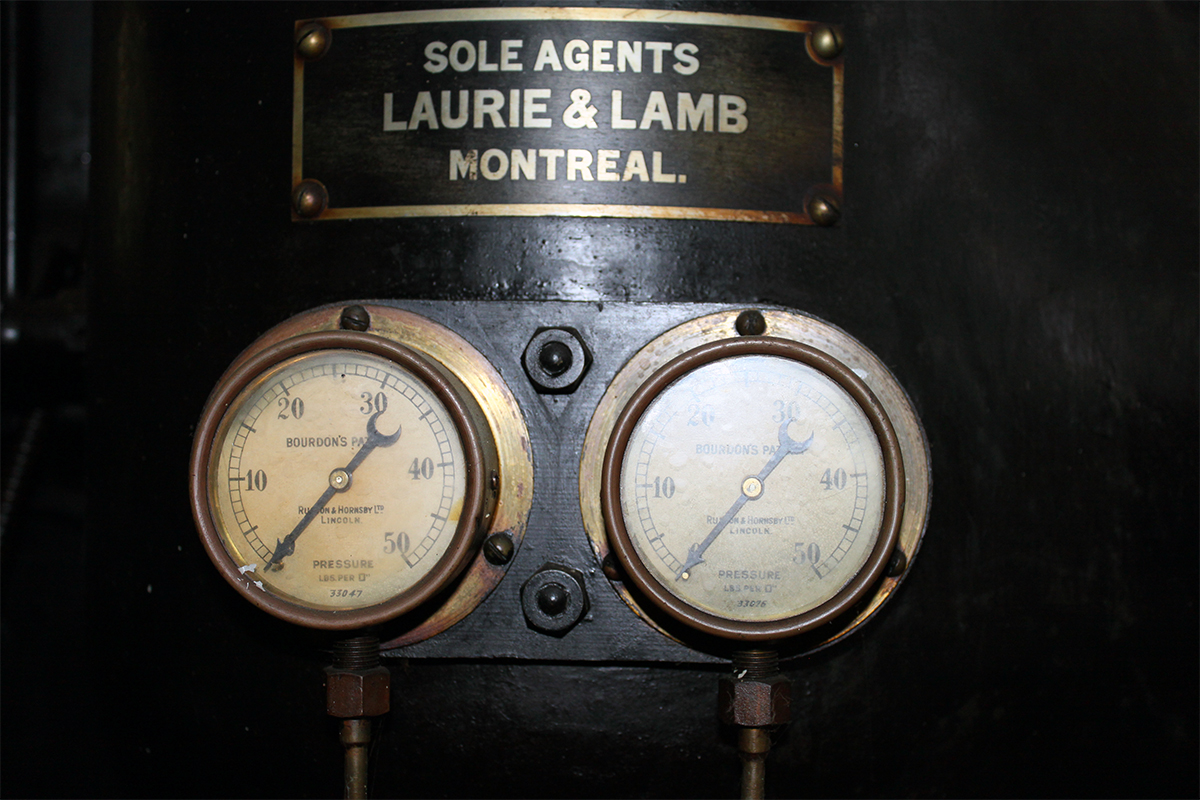
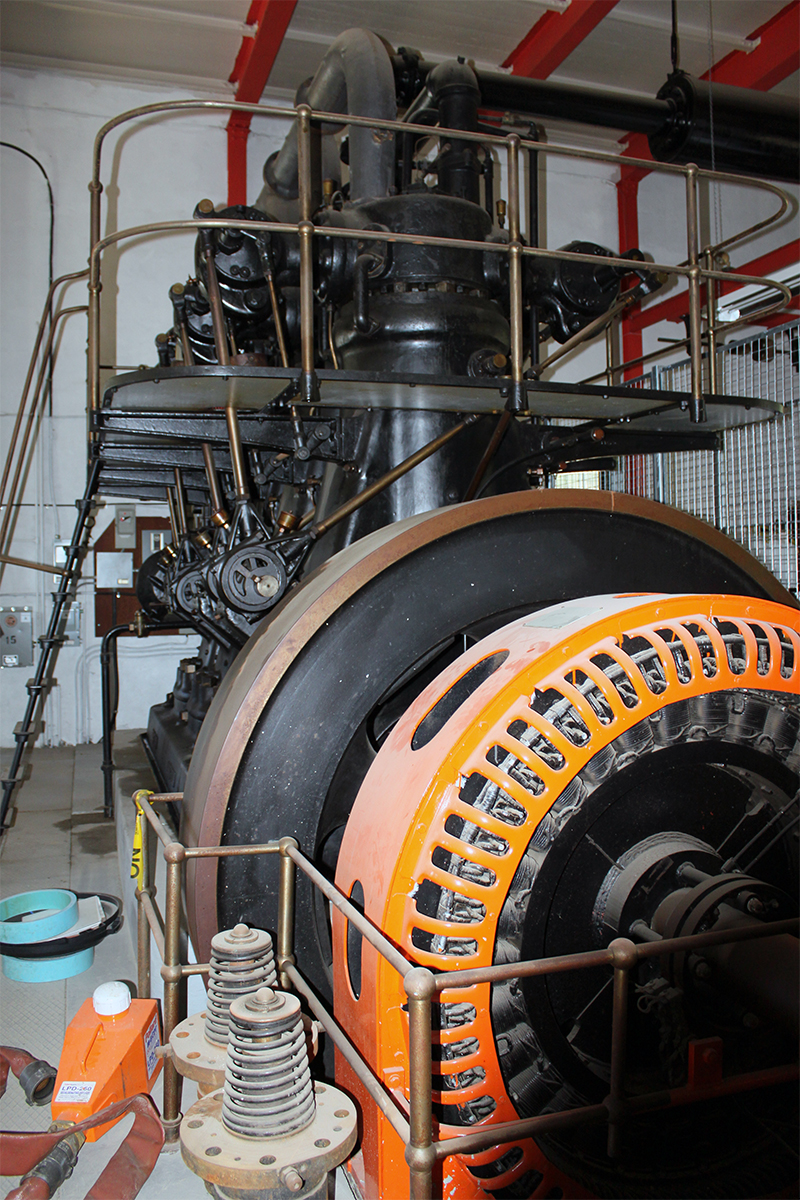
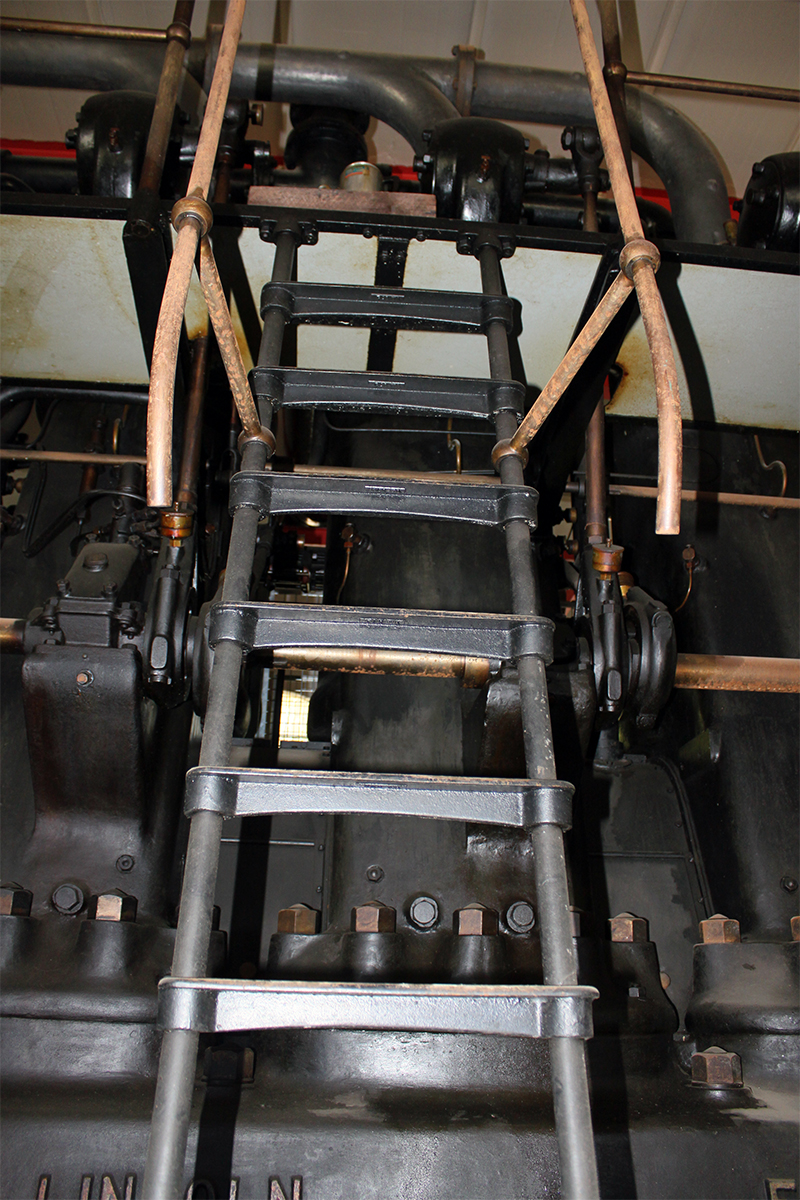
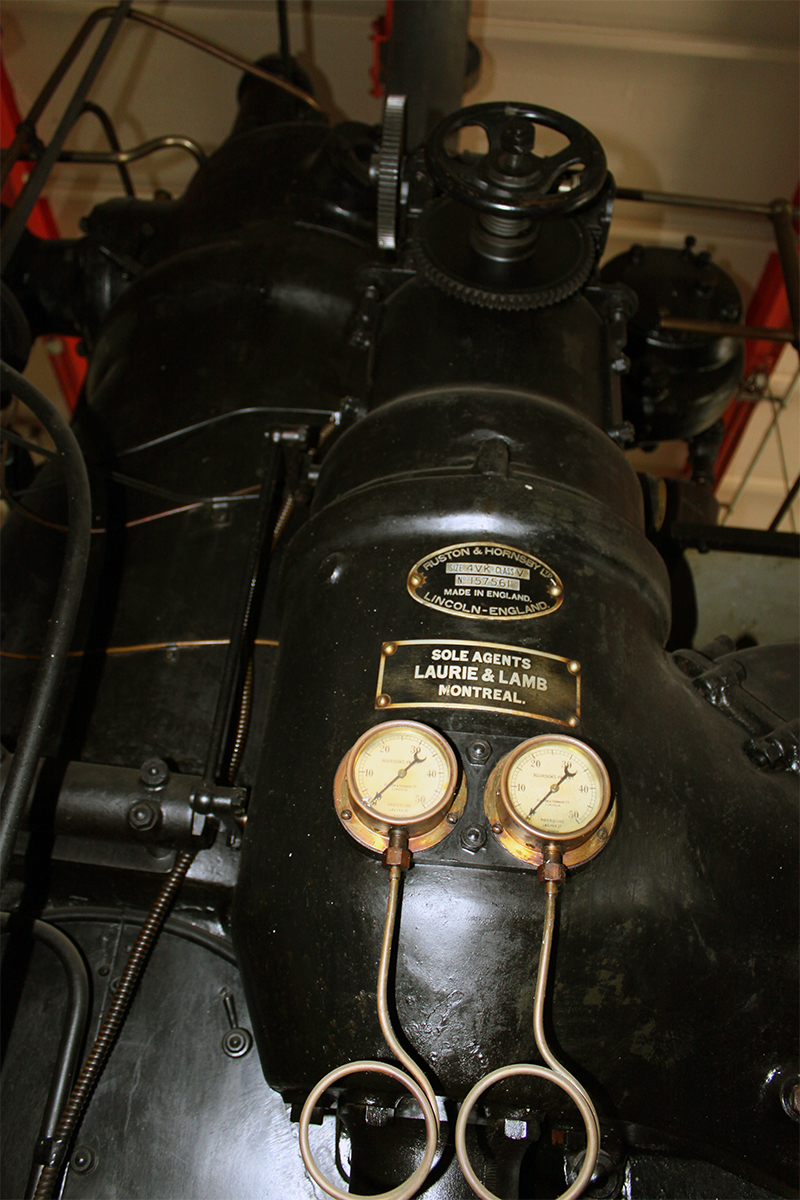
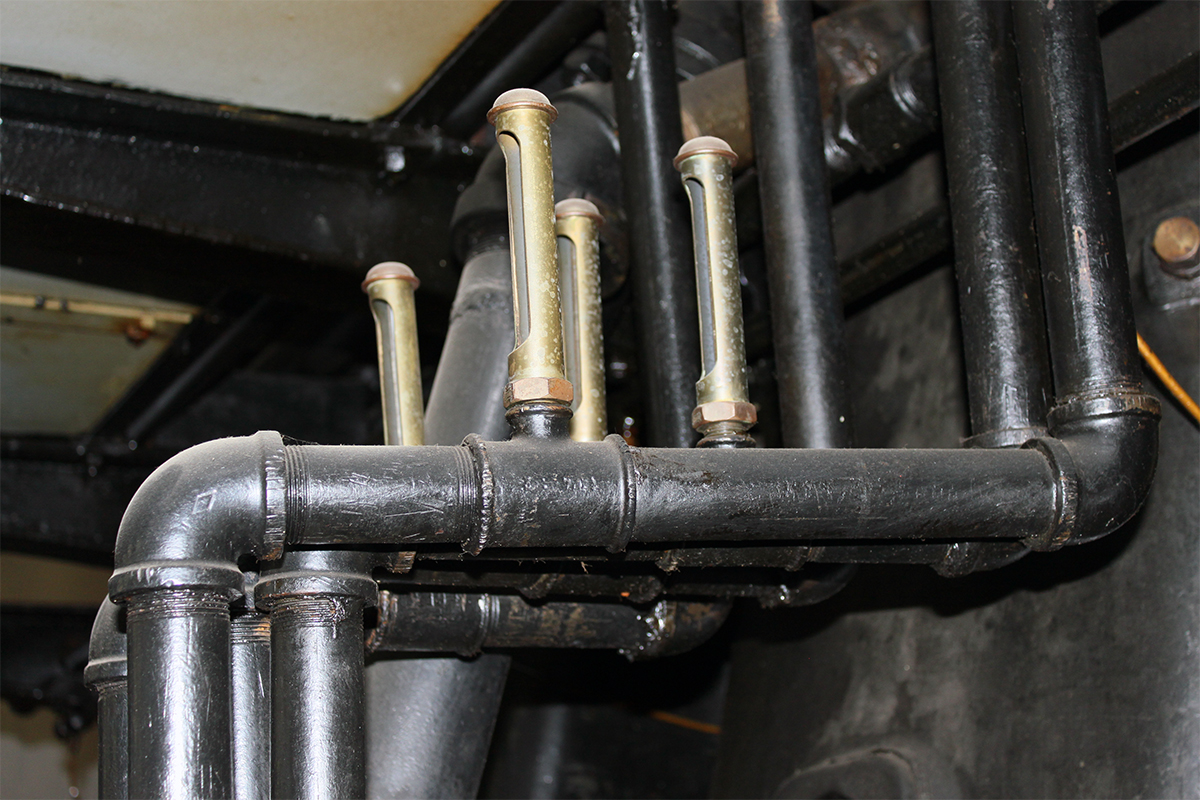
Figure 4 – Diesel generator once used to run the William Street Pumping Station.

The coal required to run the generator was delivered through a chute door located next to the main door of the pumping station.

Historical timeline:
1876 – Waterloo incorporated.
1889 – Town of Waterloo signs 10-year contract with Berlin Waterworks to supply water.
1899 – Waterloo buys part of waterworks system from Berlin Waterworks Company and builds the William Street pumping station and 3 wells at a cost of $40,000.
1914 to 1919 – World War I slows expansion of municipal waterworks due to lack of labour and materials.
1928 – Waterloo replaces Water & Light Commission with Waterloo Public Utilities Commission.
1930 – Municipal water supplies are solely from groundwater wells.
1931 to 1934 – Government work programs during the Depression aid growth of water pipe network.
1939 to 1945 – World War II causes rising industrial water use, straining municipal supplies.
1950 to 1956 – Waterloo is the fastest growing city in Canada with a population increase of 35.7%.
1965 – Waterloo County Planning Area established.
1966 – Fluoridation is introduced to water in Waterloo to promote dental health (discontinued in 2010 following referendum vote).
1973 – Regional Municipality of Waterloo forms and assumes responsibility for municipal drinking water supply.
1974 – First watermain swabbing used to clean watermain pipes.
1987 – 27 million litre capacity water tower at a height of 25 metres is built on Conservation Drive in Waterloo.
1989 – City of Waterloo designates William Street Pumping Station as a heritage building for its historic and architectural value.
1992 – The Mannheim Water Treatment Plan begins purifying surface water from the Grand River for the municipal water supply.
2013 – 7.2 million litre capacity water tower at a height of 41 metres is built near Ira Needles Boulevard in Waterloo.
In 1899 the Town of Waterloo Water Commission built the William Street Pumping Station and three wells. Prior to that, Berlin (now Kitchener) supplied water to Waterloo from a pond. #WRhistory #iamgroundwaterblog
Tweet
Related posts:
 I am groundwater
2 thoughts on “A look back in time – Waterloo’s first drinking water system”