A look back in time – Kitchener’s first drinking water system

If you’re a history buff, or even if you’re not and would like to learn more about Waterloo Region’s past, then this post is for you! Our story begins in the town of Berlin, Ontario. Haven’t heard of Berlin? If you live in Waterloo Region, you most likely have been there. You see, Berlin today is Kitchener.

Berlin’s beginnings start in the early 1800s and quickly becomes a thriving community. Between 1881 and 1891, Berlin’s population grew by 83 per cent. The blog Rye & Ginger: Berlin, Ontario until 1916, tells how “By the 1850s, the growing town became the County Seat. Its political and economic influence grew, helped by the arrival of the Grand Trunk Railway.”

Let’s fast forward to 1888. A water system that includes fire protection becomes a growing interest for the community. To address this need, the Berlin Waterworks Company – privately owned by Moffet, Hodgins and Clarke – constructs the first water supply plant to serve this thriving and growing town. The plant is built near the water source – Shoemaker Pond.

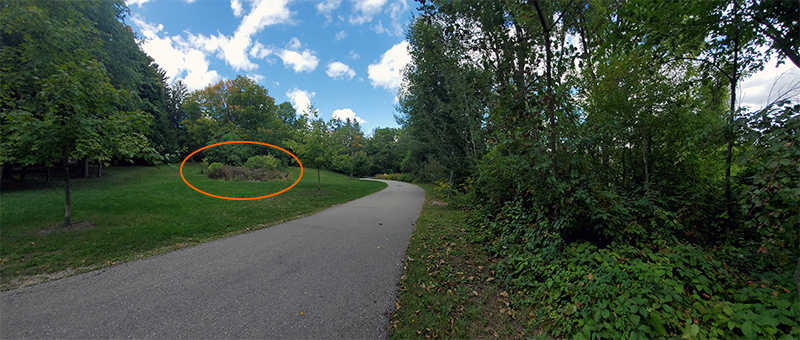
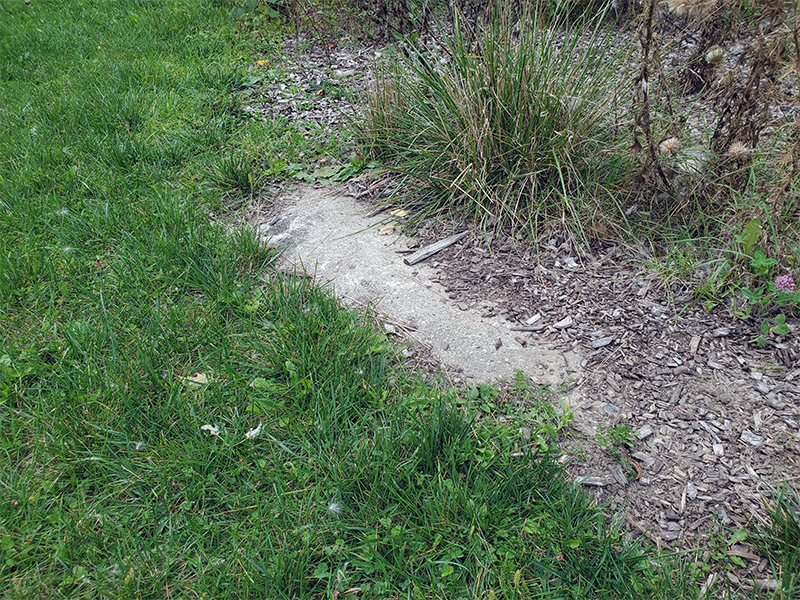
The site is located at what is now known as Lakeside Park near where the Greenbrook Water Treatment Plant now operates at 20 Greenbrook Drive in Kitchener. Today, the area looks much different surrounded by residential homes. In 1888, the location is in the country with no homes in site. Today, if you look closely, remnants of the water supply plant foundation can still be found off the path that connects the Greenbrook Water Treatment Plant parking lot with Queen’s Blvd.

Location of the first water supply plant (figures 1 to 3)
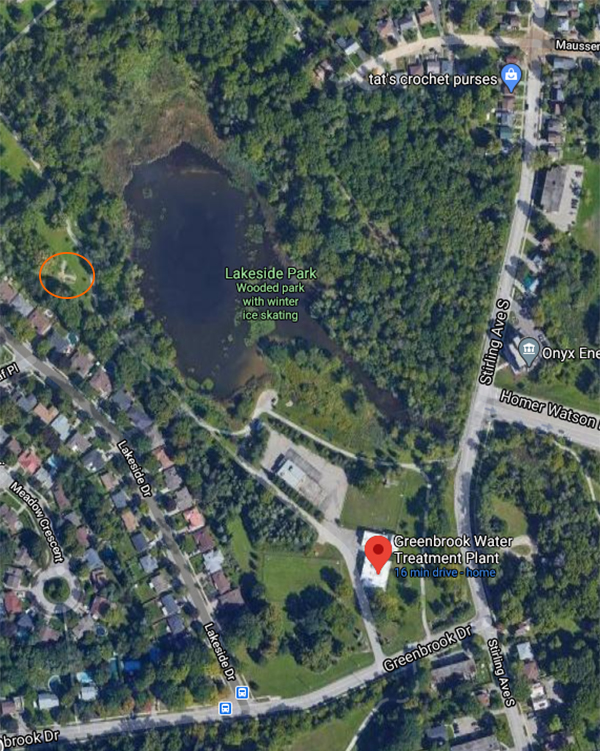
Google map of 20 Greenbrook Drive in Kitchener showing Lakeside Park.
Figure 1: Starting at the Greenbrook Water Treatment Plant, follow the path keeping Shoemaker Pond on your right until you reach the location circled on the map. Credit: Google Maps
Photo of Lakeside Park path showing location of foundation for original water supply plant.
Figure 2: Walking up the path with Shoemaker Pond on your right you will come across a flower bed on the left side of the path.
Close up look at original foundation of the water supply plant.
Figure 3: Upon closer inspection of the flower bed closest to the path you might see part of the foundation for the water supply plant built in 1888.

From 1888 to 1899, the water supply plant provides water from Shoemaker Pond to the residents of Berlin. I’m sure you can imagine what the water quality from the pond might look, smell and taste like – especially during the summer months. Public dissatisfaction with the supply persuades the citizens of Berlin to vote for a municipal water works, a very innovative idea for that time. In 1898, the Berlin Water Commission purchases the plant and takes over the responsibility of supplying water to the town.
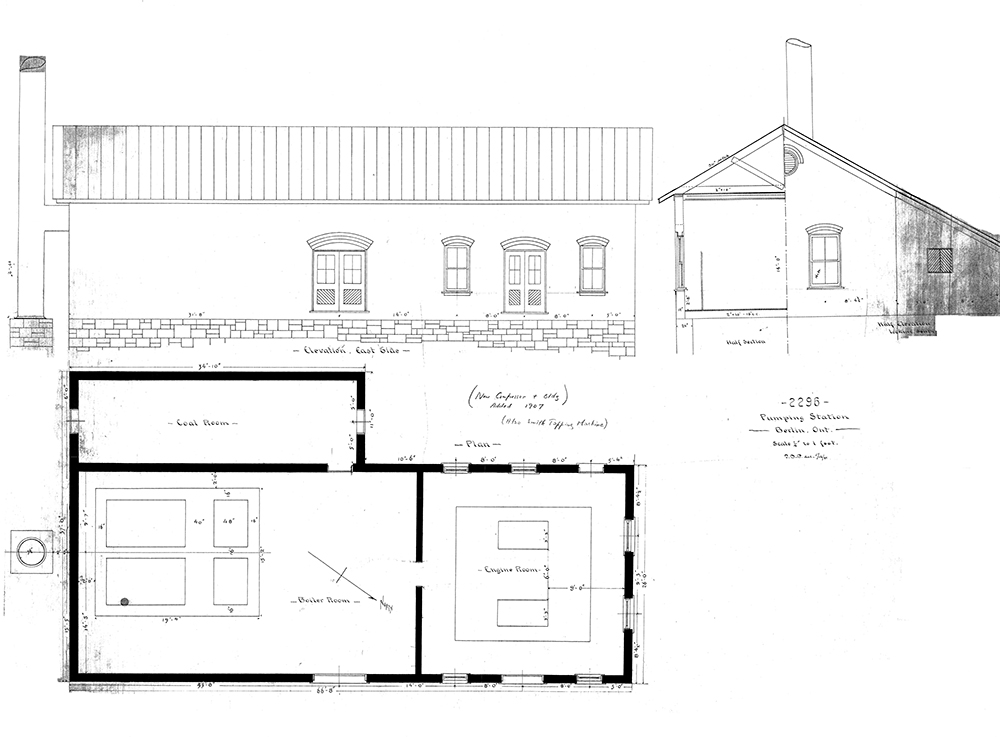
Drawing of the water supply plant built in 1888.
Figure 4 – 1888: drawing of water supply plant in Berlin.
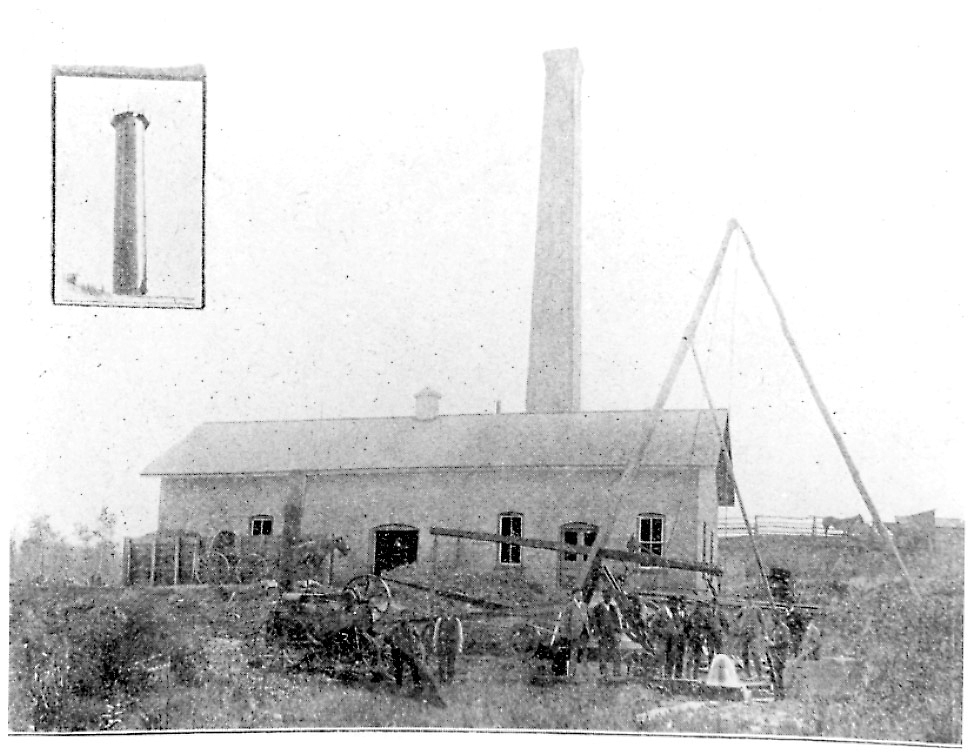
photo of persons at a groundwater well in front of the water supply plant in Berlin. Dated 1888.
Figure 5 – 1888: persons at a groundwater well in front of the water supply plant in Berlin.
Berlin water supply drawing identifying locations of wells and water supply plant.
Figure 6 – Map of Shoemaker Pond with locations of groundwater wells and water supply plant.

“If the present popularity of meters continues it will not be long till all services are metered and it is my opinion that the sooner this time arrives the better for all concerned. It is not probable that the water supply of Berlin will ever be so abundant that reckless wastes can be permitted and I know of no means of checking this more effectually than by the general use of water meters.”

Wm. Mahlon Davis, Superintendent, 1st Annual Report of the Water Commissioners of the town of Berlin, 1899.

On May 19, 1899, the Berlin Water Commission begins work to move away from supplying Berlin with water from Shoemaker Pond by drilling wells to extract groundwater (that’s me!). Throughout the year, 10 wells are constructed with the capacity to provide the community with about 4.5 million litres of water each day.
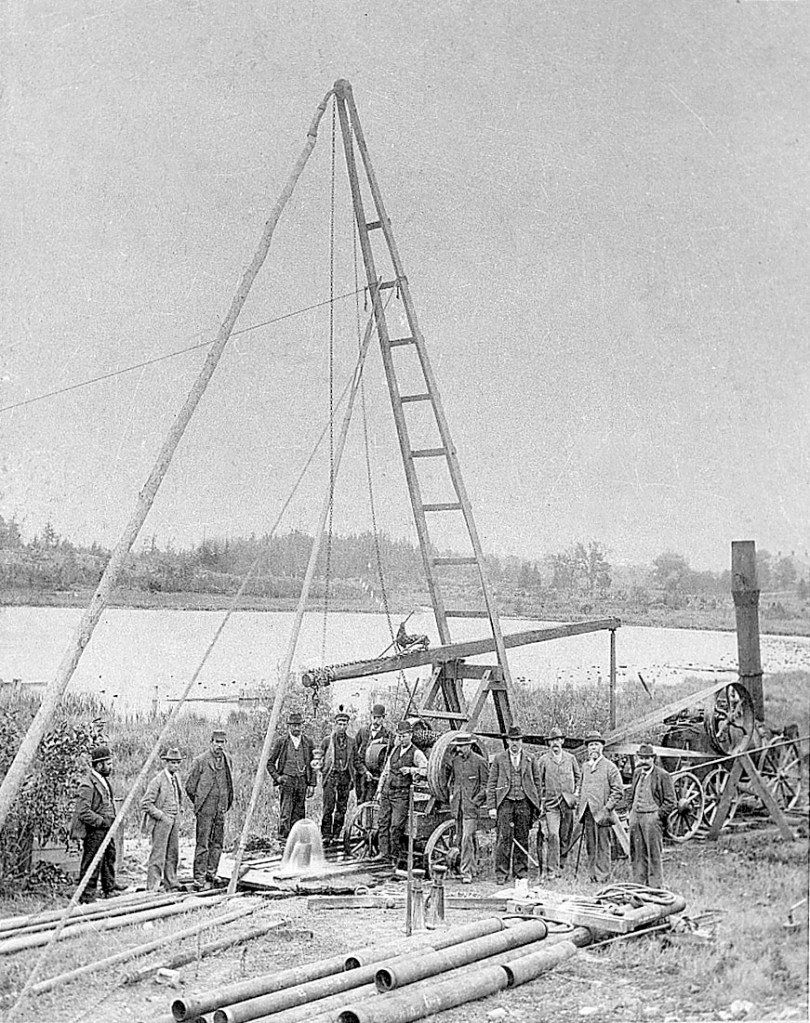
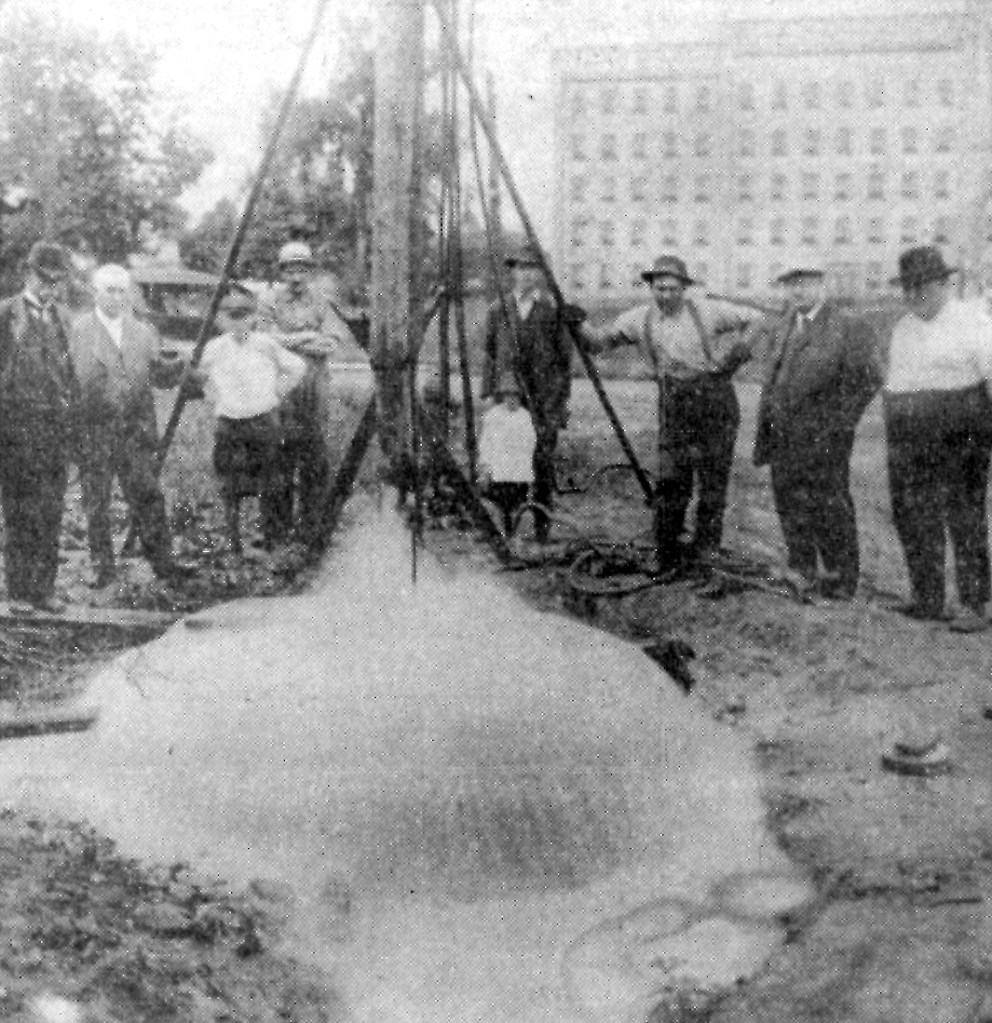
Photo of persons drilling a well near Shoemaker Pond, Berlin in 1899.
Figure 7 – 1899: persons drilling a groundwater well near Shoemaker Pond in Berlin.

“It is a water of remarkable purity, and in hardness even as low. I congratulate the town in the supply it has secured.”

John J. Mackenzie, Bacteriologist Office of Provincial Board of Health, 1899, regarding the new wells drilled for the town of Berlin.

In 1911, the first prohibition on lawn watering is enforced in Berlin supported by the hard working, frugal nature of Berlin residents who value the importance of conserving water.

“Any scheme that prevents reckless waste of water and at the same time reduces the volume of sewage as this should be encouraged.”

Wm. Mahlon Davis, Superintendent, 3rd Annual Report of the Water Commissioners of the town of Berlin, 1901.

In 1912 a pump house – to help move groundwater once extracted from the wells through the distribution system – is built where the Greenbrook Treatment Plant now stands. Over the years, this building has expanded to included improved treatment processes.
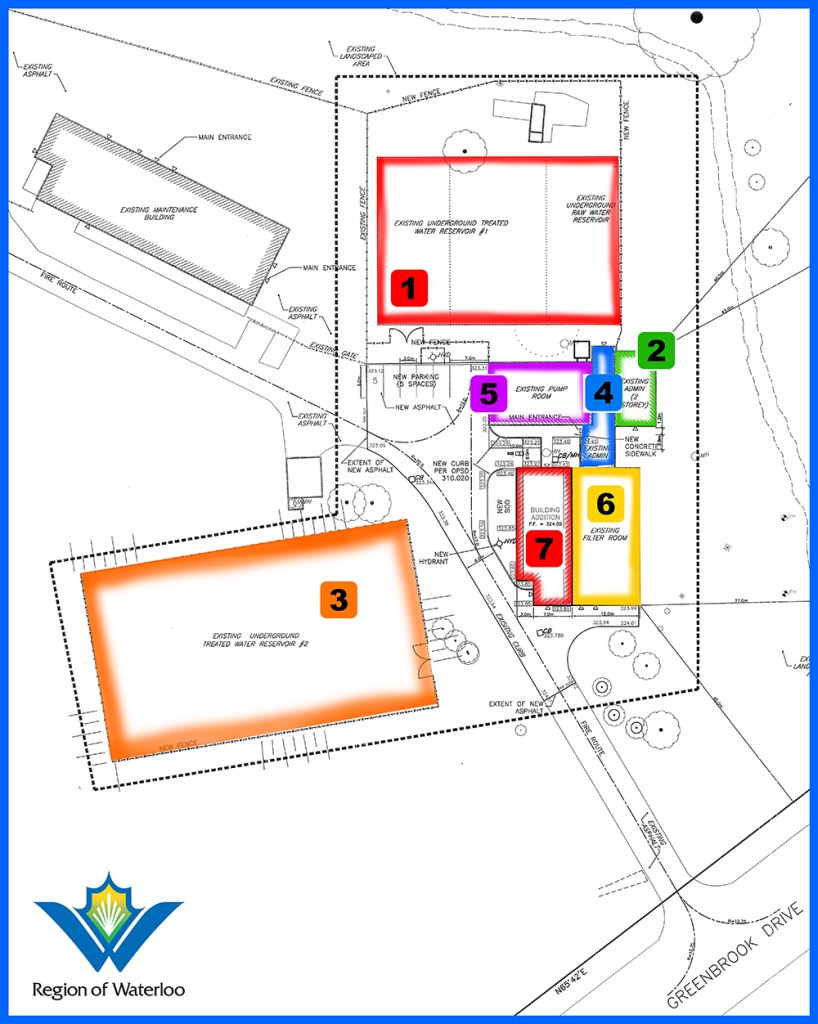
Drawing of the Greenbrook Water Treatment Plant and reservoirs with timelines when sections were built.
Figure 9 – Construction timeline for Greenbrook Water Treatment Plant and reservoirs. See below for legend.
Number on mapYear builtDescription
11914underground raw water reservoir
21930diesel house; now administrative area
31937underground drinking water reservoir
41959administrative area
51959pump room (replaces 1912 pump house and 1916 filter building)
61990iron and manganese filter room
72010advanced oxidation process treatment room
City of Kitchener Heritage Landmark plaque.
Figure 8 – In 1998, the Greenbrook Water Treatment Plant was designated as a heritage building for its importance in the early years of public service, and its Romanesque revival architecture in the 1930, 1959 and 1990 additions.
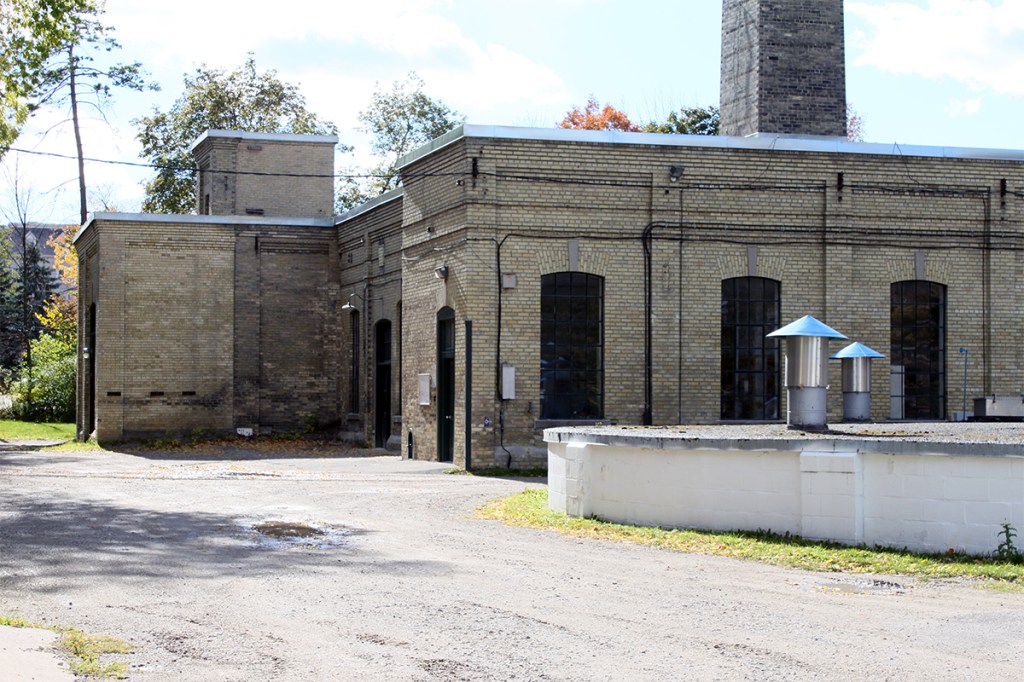
Section of Greenbrook Water Treatment Plant built in 1930.
Figure 10 – Section of Greenbrook Water Treatment Plant built in 1930.

Berlin is now Kitchener with a population of more than 230,000. The 10 wells drilled in 1899 are no longer operational. There are five supply wells we use today. The wells were drilled in 1986 to 2015 and range in depth from 32 to 50 metres extracting groundwater from a sand and gravel aquifer.
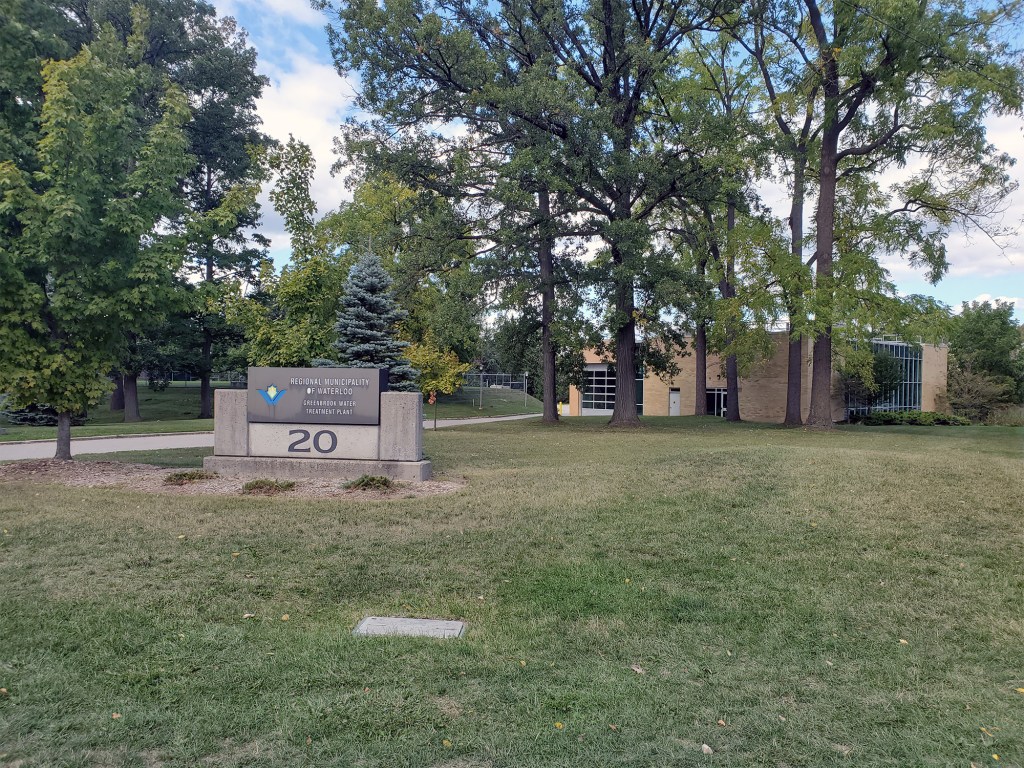
Entrance to Greenbrook Water Treatment Plant.
Figure 11 – Greenbrook Water Treatment Plant.

Today, five supply wells, many monitoring wells, two reservoirs and a treatment plant make up the Greenbrook wellfield. The wellfield provides 8 per cent of the drinking water for Kitchener – about 6.5 million litres – enough to fill 130 backyard swimming pools every day.

  • Historical timeline:

    1854 – Berlin incorporated.

    1888 – American firm forms the Berlin Waterworks Company and begins pumping at Shoemaker Pond.

    1889 – Town of Waterloo signs 10-year contract with Berlin Waterworks Company to supply water.

    1896 – A major factory fire in Berlin causes a change in community acceptance of public water supply systems.

    1898 – Town of Berlin buys Berlin Waterworks Company for $102,000.

    1899 – Berlin Commission forms and constructs the first well near Shoemaker Pond.

    1911 – First ban on lawn watering in Berlin and Preston due to water shortages.

    1914 to 1919 – World War I slows expansion of municipal waterworks due to lack of labour and materials.

    1916 – Berlin changes its name to Kitchener.

    1927 – 3.8 million litre capacity water tower built on George Street in Kitchener (2011: decommissioned).

    1930 – Municipal water supplies are solely from groundwater wells.

    1931 to 1934 – Government work programs during the Depression aid growth of water pipe network.

    1939 to 1945 – World War II causes rising industrial water use, straining municipal supplies.

    1953 – Mannheim wells begin supplying Kitchener with 20 per cent of water supply. This lessens demand for water from the Greenbrook wells.

    1955 – Ontario Water Resources Commission established. Kitchener is one of 14 municipalities represented.

    1965 – Waterloo County Planning Area established.

    1973 – Regional Municipality of Waterloo forms and assumes responsibility for municipal drinking water supply.

    1974 – First watermain swabbing used to clean watermain pipes.

    1992 – The Mannheim Water Treatment Plant begins purifying surface water from Grand River for municipal water supply.

    1993 – 6.8 million litre capacity water tower at a height of 50.77 metres is built on Sportsworld Drive in Kitchener.

    1998 – City of Kitchener designates the Greenbrook Treatment Plant as a heritage building for its importance in the early years of public service, and its Romanesque revival architecture in the 1930, 1959 and 1990 additions.

In 1888 Berlin Waterworks Company built a water pumping station in Berlin (now Kitchener) to supply water from Shoemaker pond. Today 5 groundwater wells at the Greenbrook Water Treatment Plant supply Kitchener with water. #WRhistory #Iamgroundwaterblog

Related posts:

A look back in time – Waterloo’s first drinking water system

In my last post I shared the story of Kitchener’s first drinking water system. Today I’d like to share Waterloo’s.

It’s the late 1800s. The Town of Waterloo – with a population of less than 3000 – is in need of a water system and must make the decision of how to supply water to the community. Waterloo voters reject a proposal of municipal ownership of the water works – a new idea at the time.

In 1889 the town signs a 10-year contract with Waterloo Water Works – a private company – to supply water to the community. The Waterloo Water Works company hires the Berlin Waterworks company to supply Waterloo with water.

From 1889 to 1899, the municipal water supply for Waterloo is piped from Shoemaker Pond in Berlin (now Lakeside Park in Kitchener). This water is not always of good quality, to say the least.

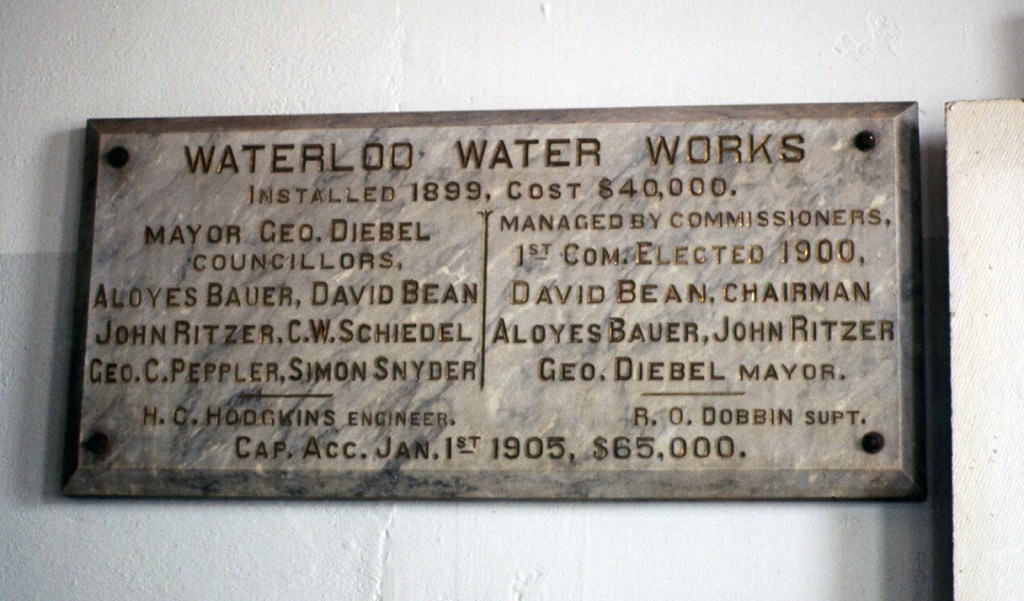
In April 1899, the poor quality of the water supply influences the passing of a bylaw for a municipal water works. This prompts the construction of the William Street Pumping Station and three drinking water wells funded through a debenture of $40,000. A small, open reservoir connected to the three underground reservoirs handles any overflow. The open reservoir also served as a decorative feature and often included fish.

plaque commemorating the formation of the Water Commission and construction of the William Street pumping station in 1899.
Figure 1 – Plaque commemorating the formation of the Water Commission and construction of the William Street Pumping Station in 1899.

The wells that operate today were constructed in the 1940s and 1950s. They are about 35 metres deep and extract groundwater from a sand and gravel aquifer which is at the edge of the Waterloo Moraine. One reservoir with a 2.3 million litre capacity is located on the north end of the property.

William Street Pumping Station near King Street and across from Waterloo City Hall.
Figure 2 – William Street Pumping Station near King Street and across from Waterloo City Hall.
Waterloo Public Utilities Commission and town officials tapping an artesian well on Caroline Street, 1919.
Figure 3 – Waterloo Public Utilities Commission and town officials tapping an artesian well on Caroline Street, 1919.

The William Street property is shared with Waterloo North Hydro. In 1910, the town’s Water Commission became the Water and Light Commission and in 1928, became the Public Utilities Commission. Unlike the water utility, the power utility was later privatized as Waterloo North Hydro.

During the early days of the Water Commission, the chief operator lived in one of the homes behind the William Street Pumping Station. The operator had to live nearby in order to be available to fix problems and to keep the pumping station operational.

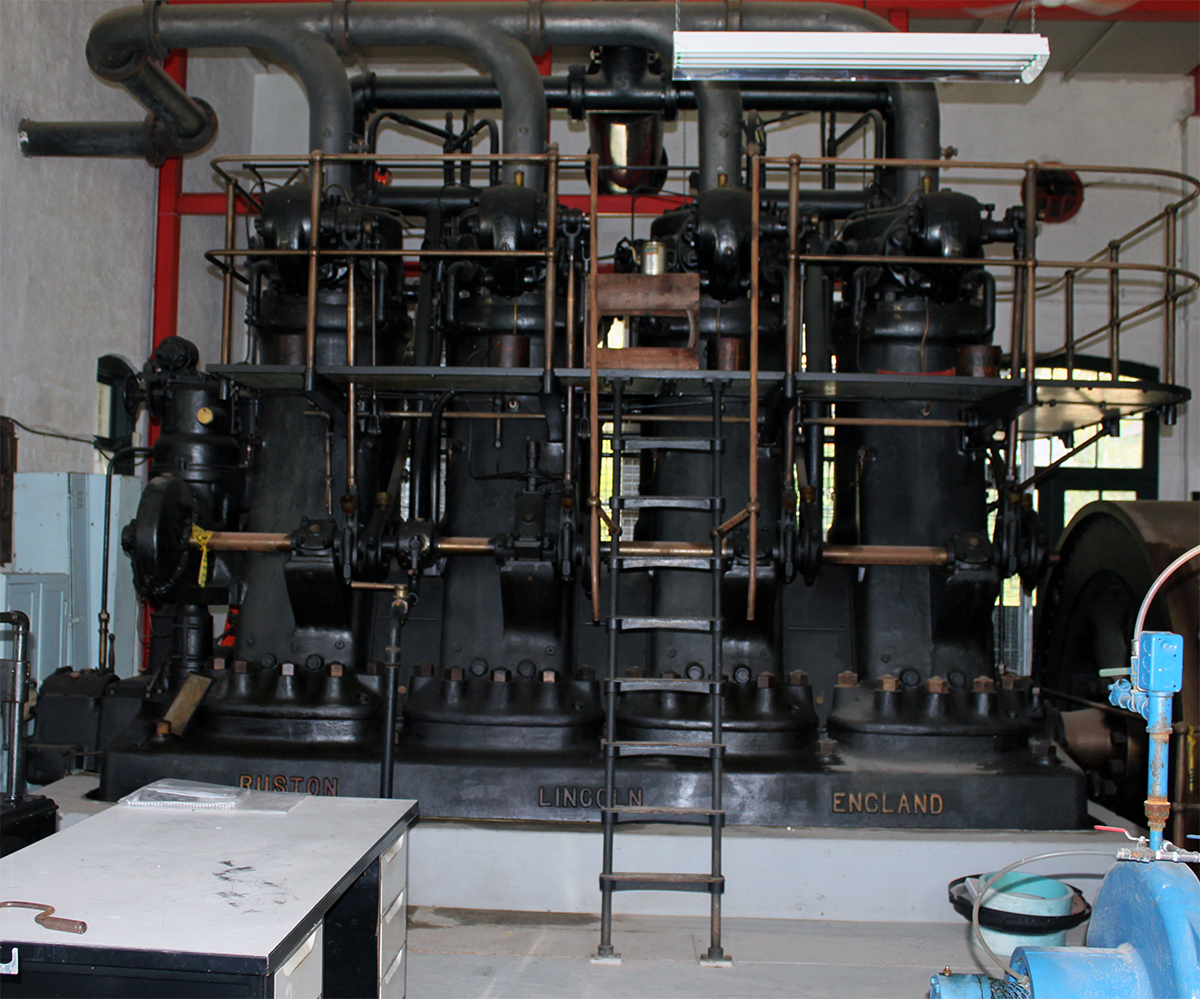
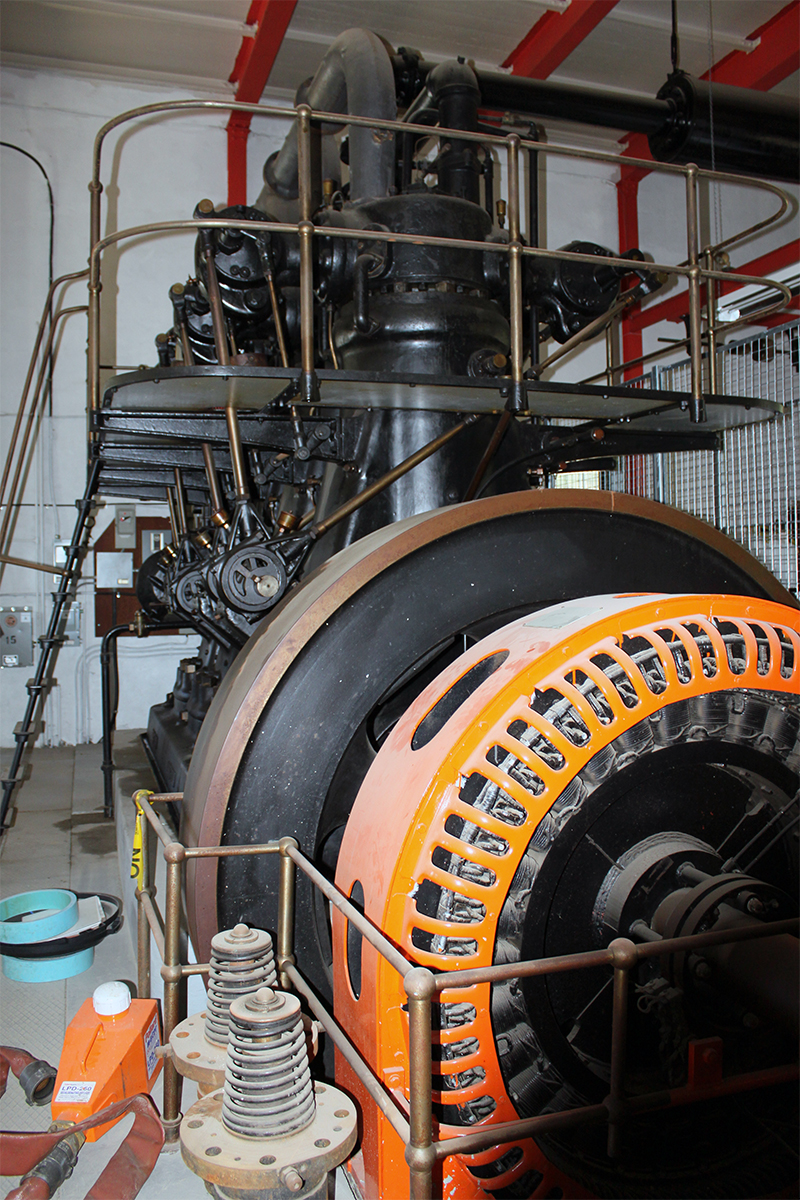
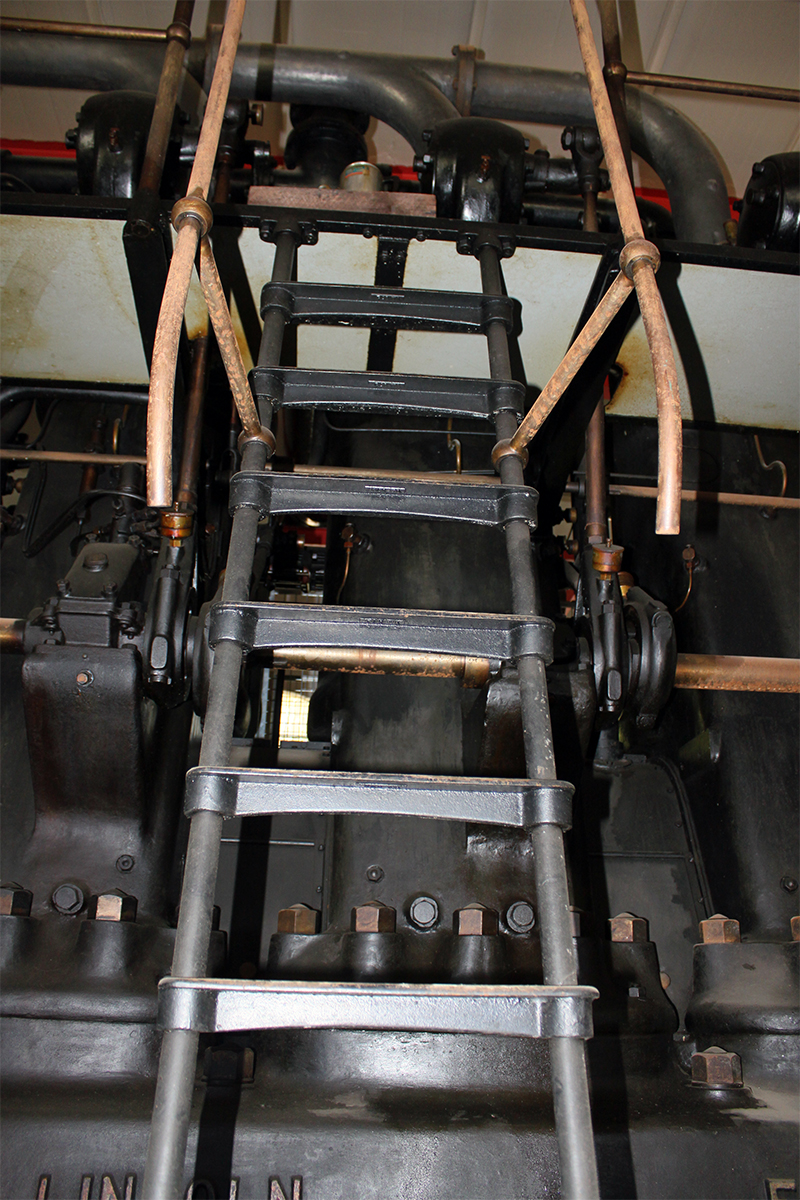
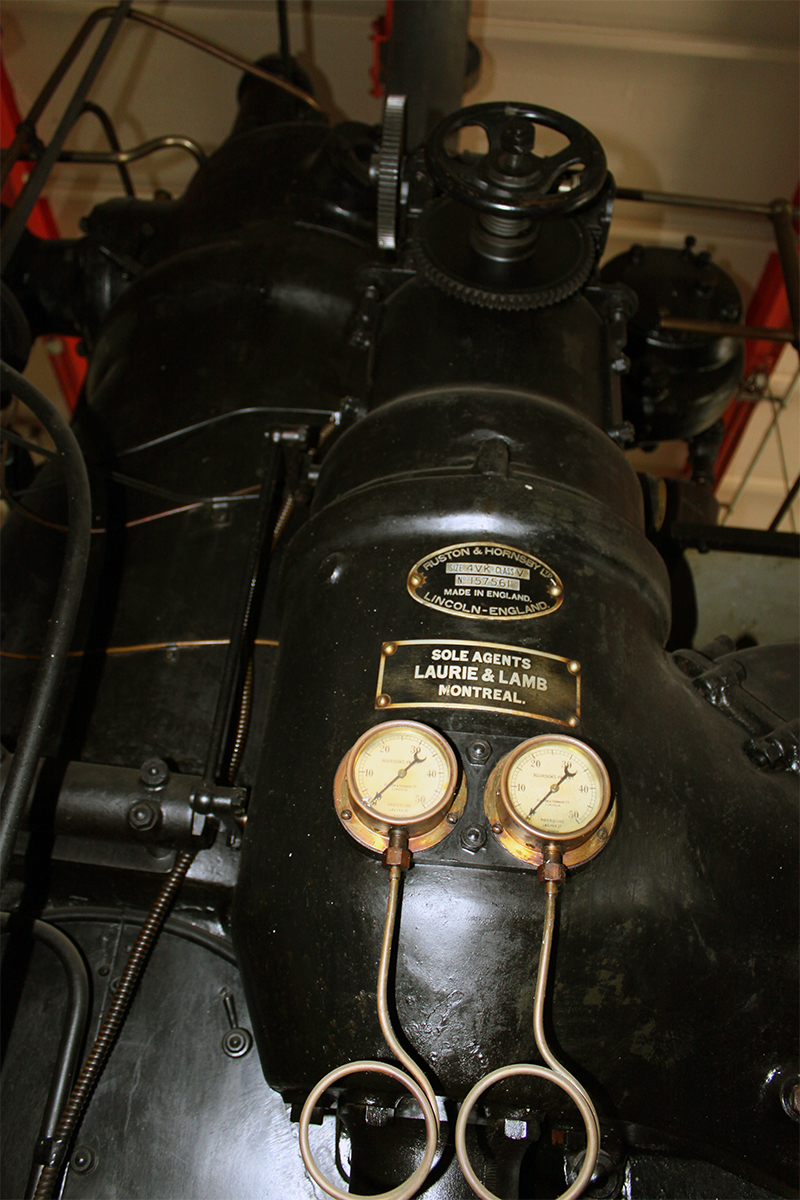
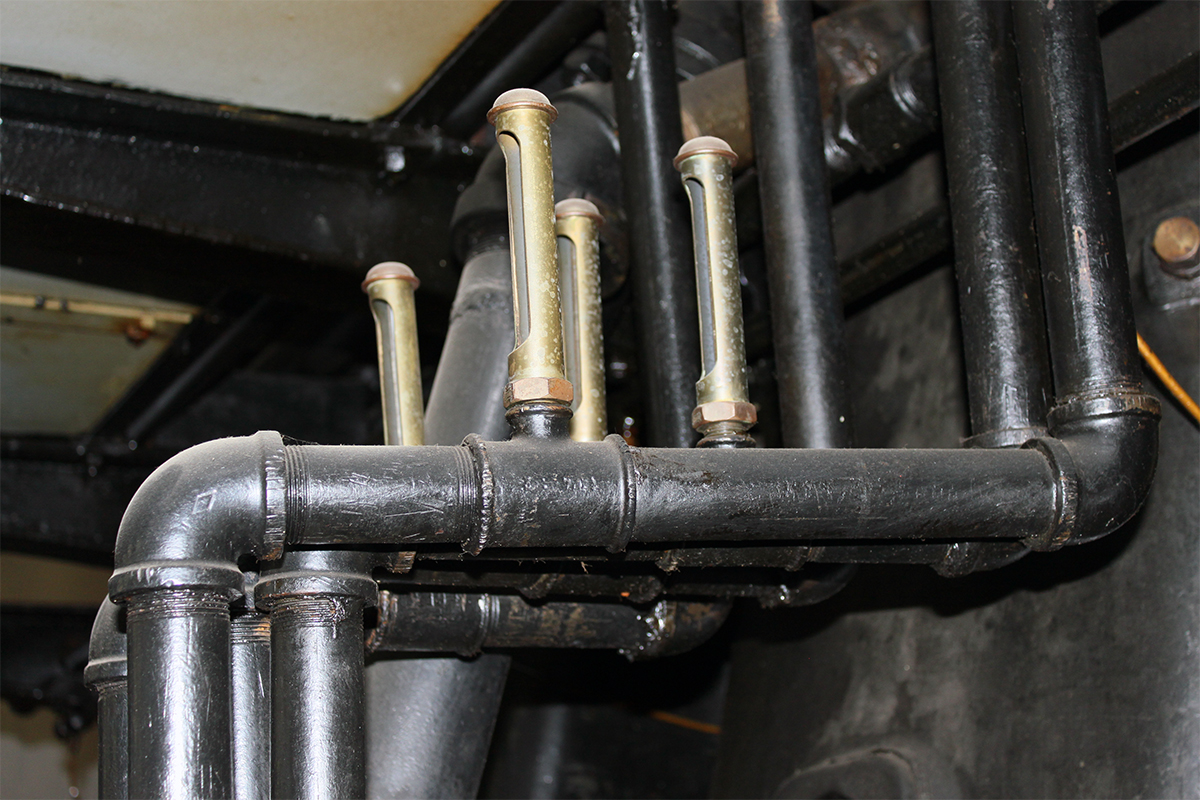
A diesel generator fuelled with coal was used to power the pumping station and also was a backup source of power for the nearby Waterloo Threshing plant. After electricity was connected, the diesel generator was used as an emergency backup power source. The last time the generator was used was July 1989. The generator and a wall board with the custom tools once used to maintain the generator and other machines still exists.

Figure 4 – Diesel generator once used to run the William Street Pumping Station.

Tools used to maintain the diesel generator.
Figure 5 – A wall board with the tools once used to maintain the diesel generator.

The coal required to run the generator was delivered through a chute door located next to the main door of the pumping station.

Chute door used to deliver coal to run the diesel generator.
Figure 6 – Chute door once used to deliver coal for the diesel generator.
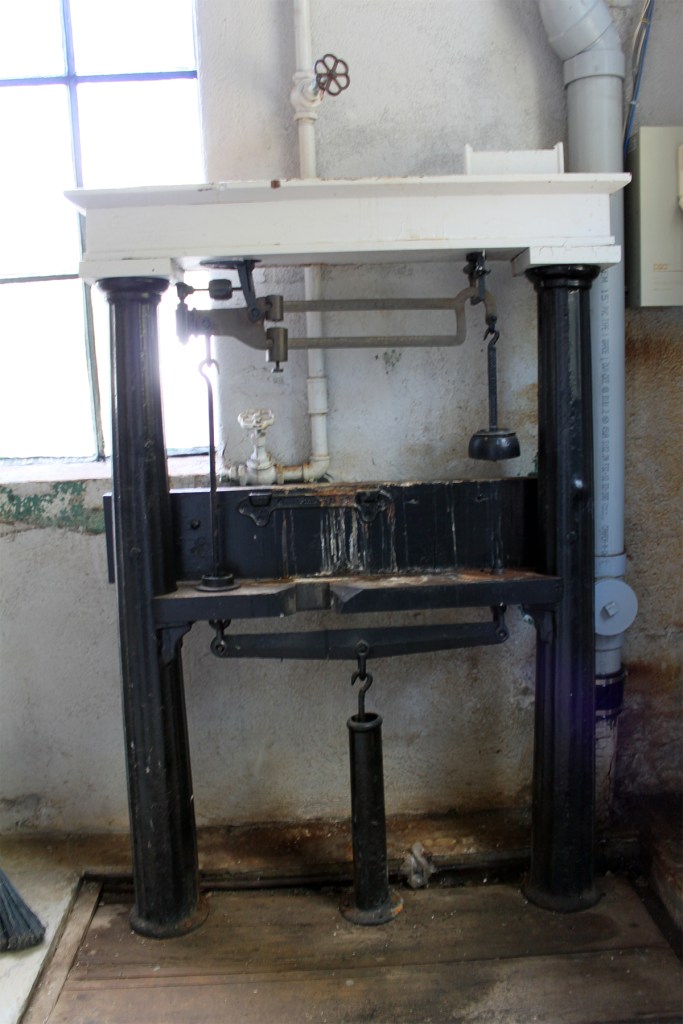
Scales used to weigh coal required to run the diesel generator.
Figure 7 – Scales once used to weigh coal for the diesel generator.
  • Historical timeline:

    1876 – Waterloo incorporated.

    1889 – Town of Waterloo signs 10-year contract with Berlin Waterworks to supply water.

    1899 – Waterloo buys part of waterworks system from Berlin Waterworks Company and builds the William Street pumping station and 3 wells at a cost of $40,000.

    1914 to 1919 – World War I slows expansion of municipal waterworks due to lack of labour and materials.

    1928 – Waterloo replaces Water & Light Commission with Waterloo Public Utilities Commission.

    1930 – Municipal water supplies are solely from groundwater wells.

    1931 to 1934 – Government work programs during the Depression aid growth of water pipe network.

    1939 to 1945 – World War II causes rising industrial water use, straining municipal supplies.

    1950 to 1956 – Waterloo is the fastest growing city in Canada with a population increase of 35.7%.

    1965 – Waterloo County Planning Area established.

    1966 – Fluoridation is introduced to water in Waterloo to promote dental health (discontinued in 2010 following referendum vote).

    1973 – Regional Municipality of Waterloo forms and assumes responsibility for municipal drinking water supply.

    1974 – First watermain swabbing used to clean watermain pipes.

    1987 – 27 million litre capacity water tower at a height of 25 metres is built on Conservation Drive in Waterloo.

    1989 – City of Waterloo designates William Street Pumping Station as a heritage building for its historic and architectural value.

    1992 – The Mannheim Water Treatment Plan begins purifying surface water from the Grand River for the municipal water supply.

    2013 – 7.2 million litre capacity water tower at a height of 41 metres is built near Ira Needles Boulevard in Waterloo.

In 1899 the Town of Waterloo Water Commission built the William Street Pumping Station and three wells. Prior to that, Berlin (now Kitchener) supplied water to Waterloo from a pond. #WRhistory #iamgroundwaterblog

Related posts:

A look back in time – Cambridge’s first drinking water system

My last few posts have been about Kitchener’s first drinking water system and Waterloo’s first drinking water system. Today I’d like to share Cambridge’s story.

Galt (now part of Cambridge) was the first community in Waterloo Region to have a publicity owned waterworks. Galt – like many communities – wanted a waterworks for fire protection, but also to compete with nearby Berlin (now Kitchener) for industry and residents.

The year is 1888 and after much debate in the community, Galt votes down – 2 to 1 – having a public waterworks. However, in 1890 a bylaw is passed and a construction contract signed to build a water pumping station on Middleton Street.

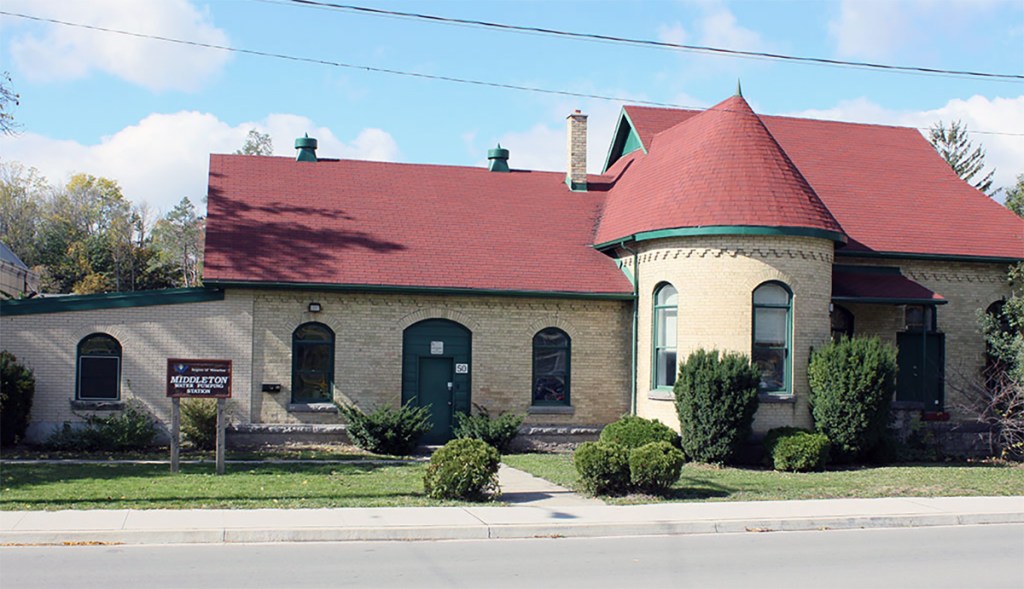
Middleton Water Pumping Station at 60 Middleton Street in Cambridge.
Figure 1 – Middleton Water Pumping Station, 60 Middleton Street, Cambridge.

Even though Middleton Water Pumping Station is built along the Grand River, the river is not an option for a water source. The river has very low flow sometimes because control dams have not yet been constructed to control water levels. Water quality for the Grand River is also poor due to contamination from industrial discharges including dyes from nearby garment factories.

So instead of accessing water from the Grand River, water is redirected from nearby springs. In 1895, the source switches to groundwater when the first well is drilled and constructed. The following year in 1896 a second well is built. Today, there are still operating wells in the same location, and it is very likely that they are the same wells; open holes drilled into the deeper fractured rock and sealed through the shallow rock to protect the deeper water quality.

In 1902, the long low section of the Middleton Water Pumping Station is the reservoir. This reservoir has since been removed but the north wall of the pumping station still shows the marks of the building.

Low section of the Middleton Water Pumping Station where reservoir was located.
Figure 2 – Low section of the Middleton Water Pumping Station where reservoir was located.
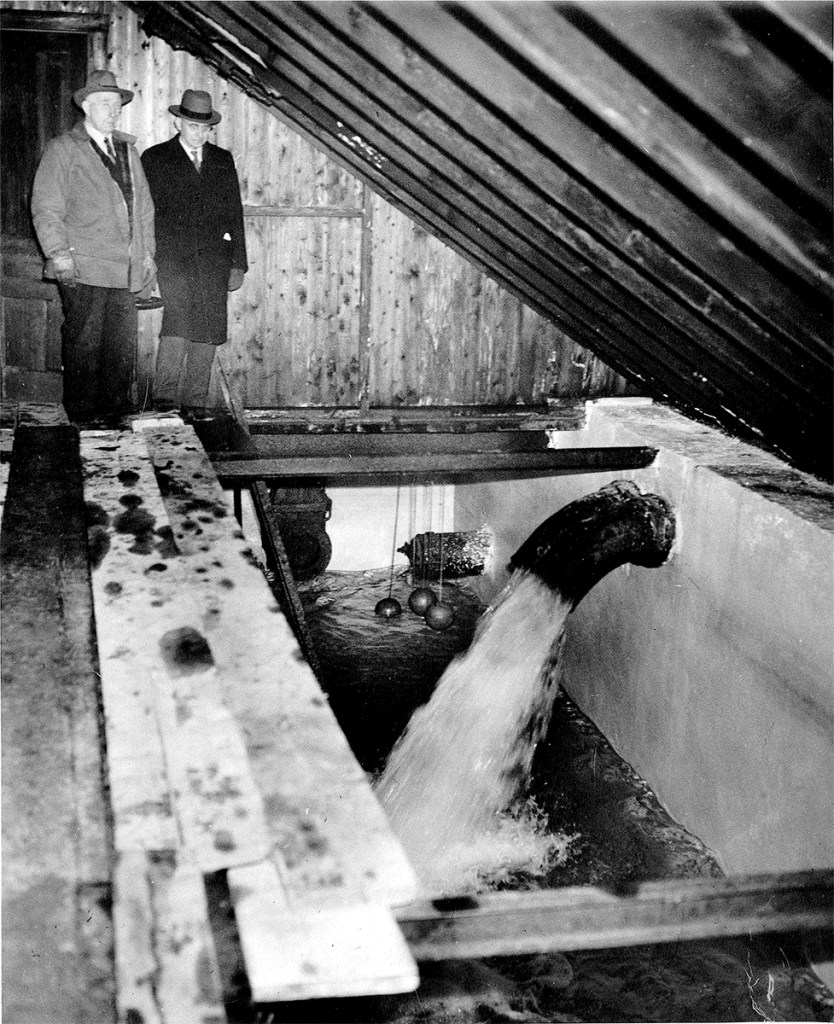
Two people looking at wood reservoir inside the Middleton Water Pumping Station.
Figure 3 – Wood reservoir at the Middleton Water Pumping Station.

In 1973, when Galt, Hespeler and Preston amalgamate to form Cambridge, the water works, including the Middleton Water Pumping Station, become the responsibility of the Regional Municipality of Waterloo.

In 1996, a new facility is built on the same five-acre lot to expand the capacity of the system to handle 20 million litres of water a day – six times the capacity of the original water works.

Today, all the water pumped at the Middleton Water Pumping Station is from five groundwater wells.

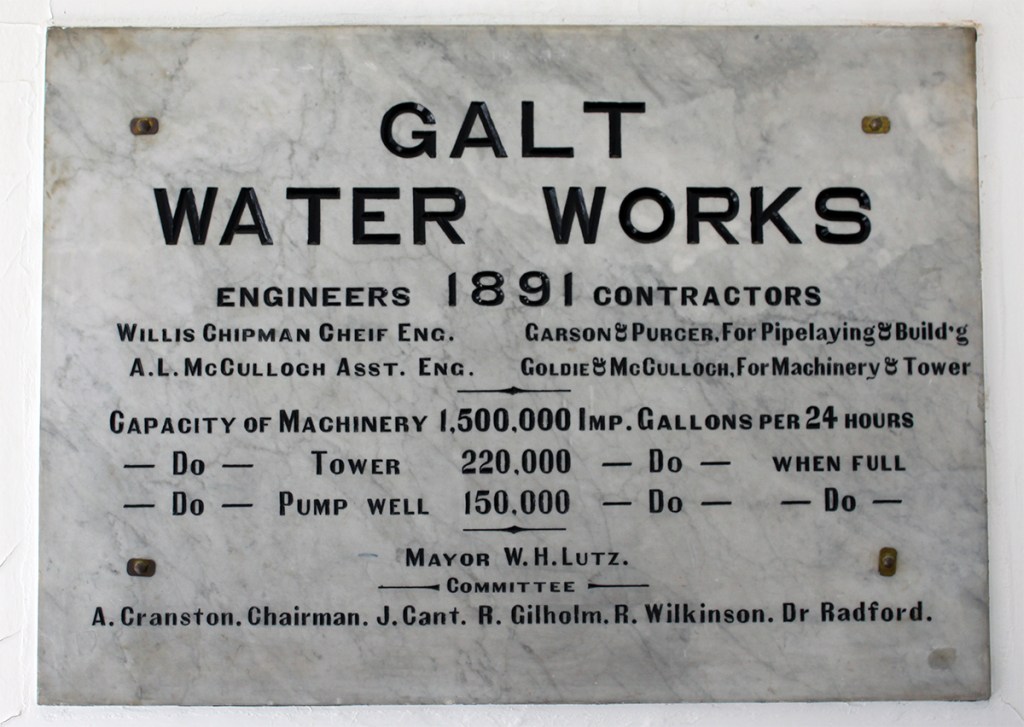
Middleton Water Pumping Station dedication plaque.
Figure 4 – Middleton Water Pumping Station dedication plaque. Look closely – can you spot the spelling mistake?
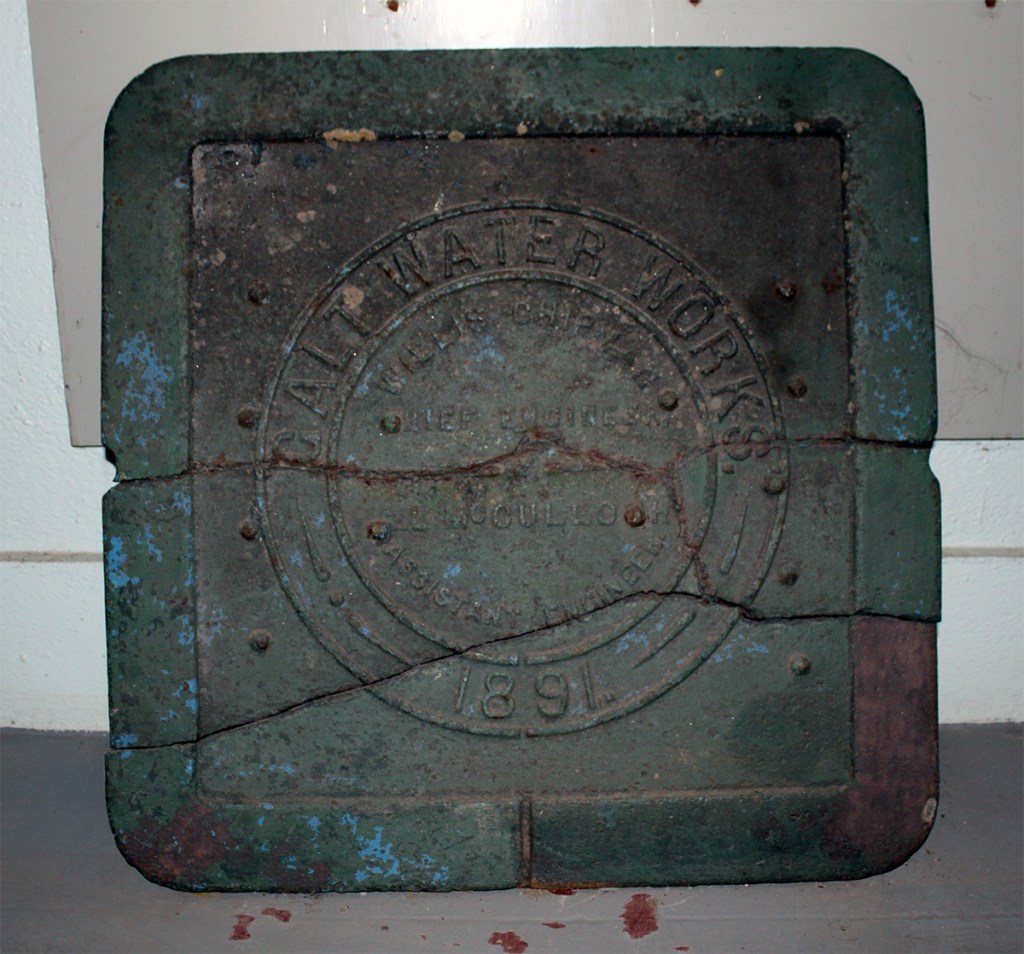
Galt Water Works sewer cover, 1891.
Figure 5 – Galt Water Works sewer cover, 1891.
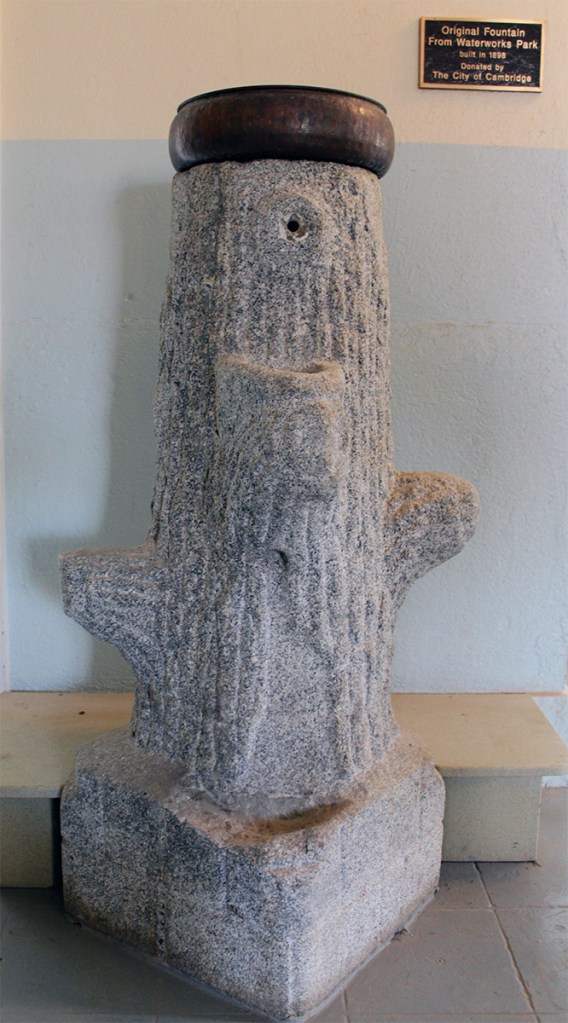
Original fountain from Waterworks Park built in 1898.
Figure 6 – Original fountain from Waterworks Park built in 1898.
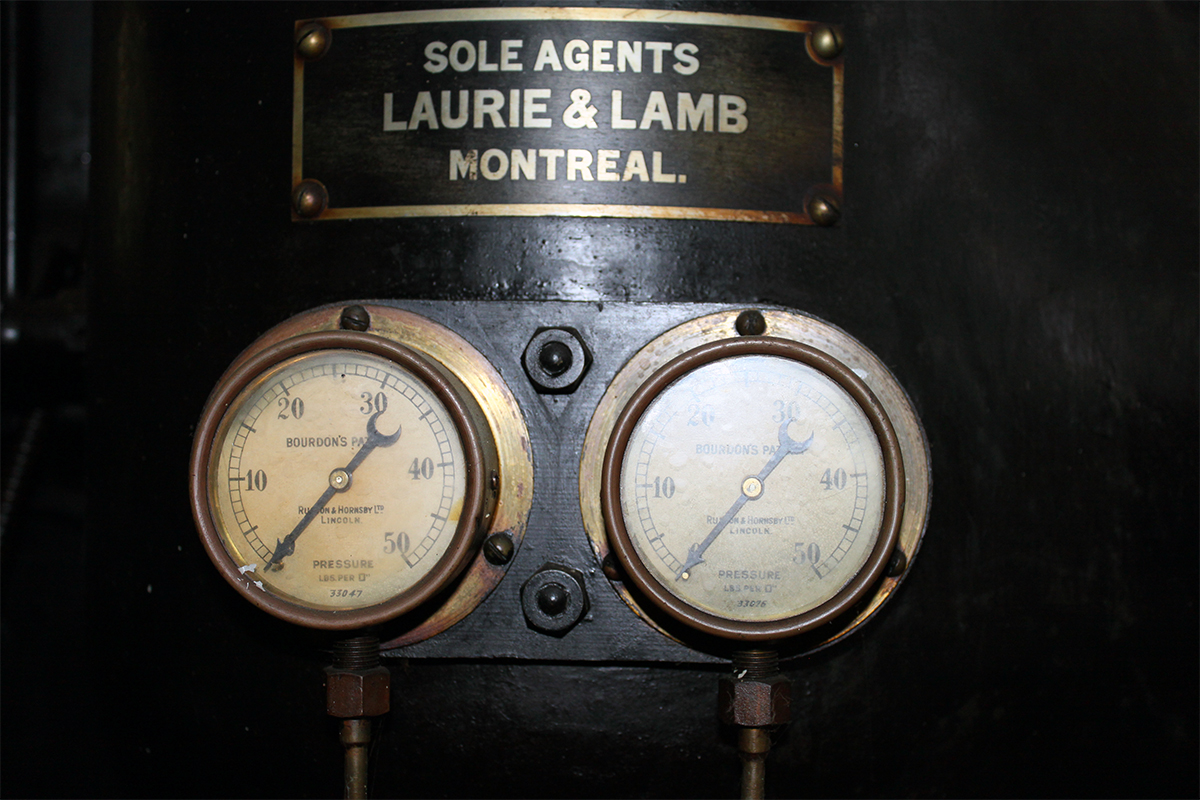
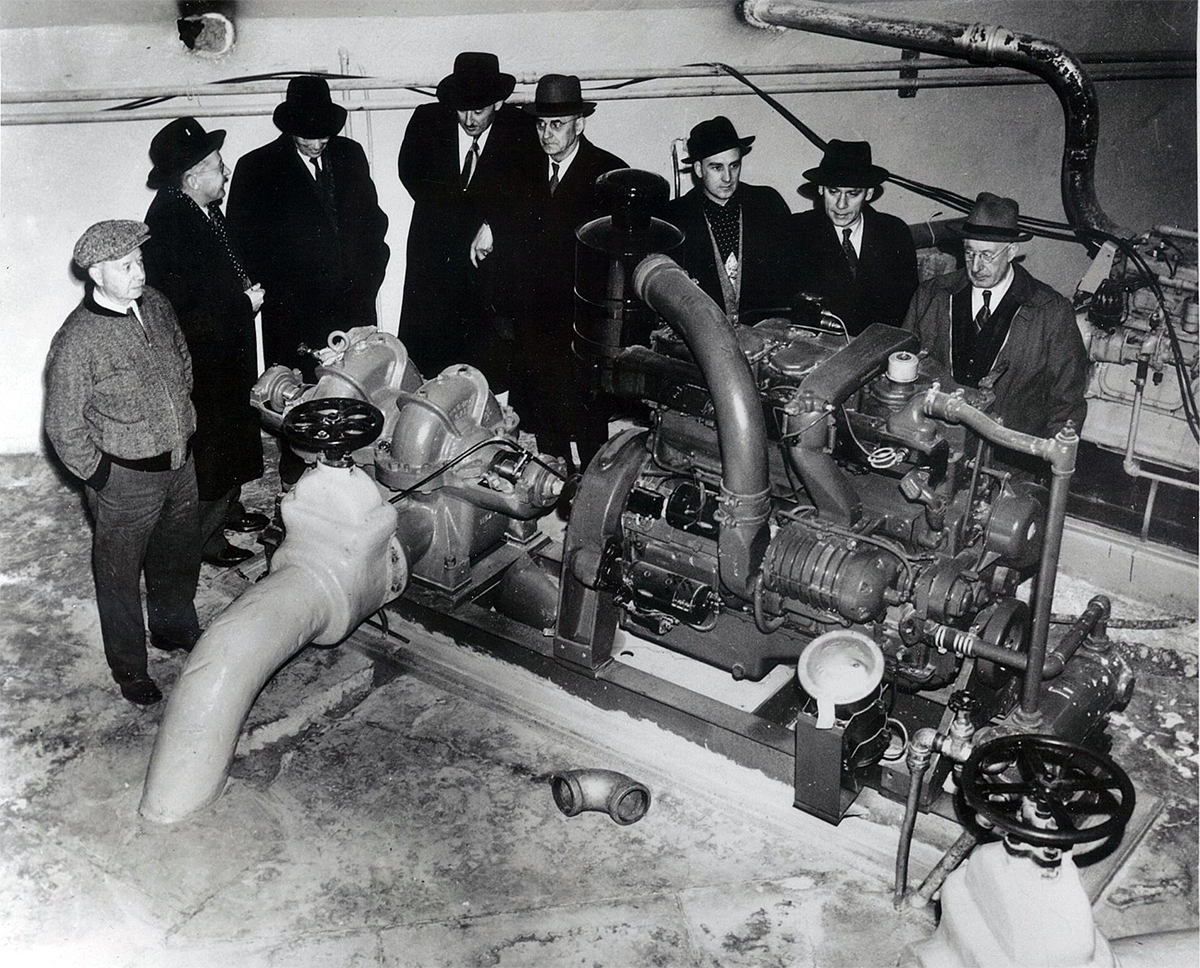
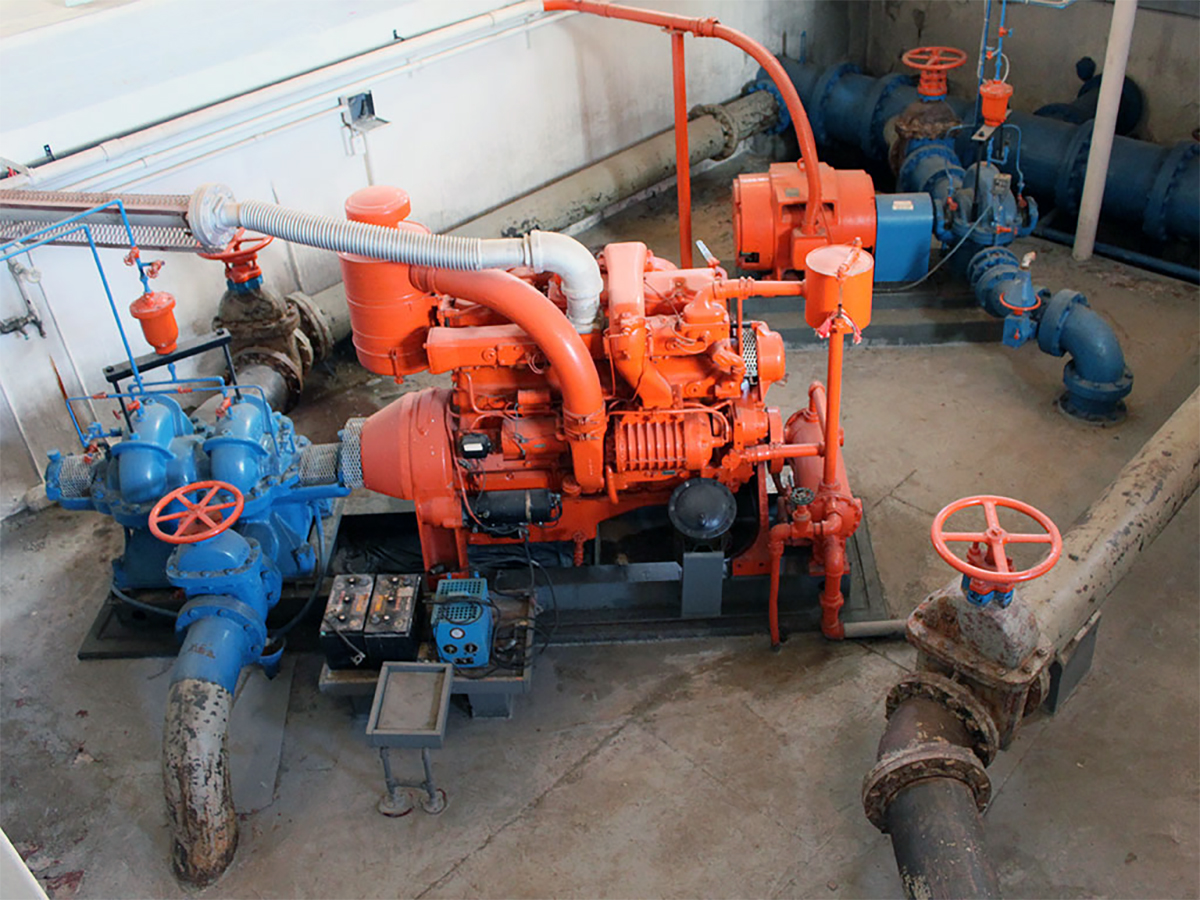
Figure 7 – Motor and pump inside the Middleton Water Pumping Station. Move the slider between the photos to compare the photo on left taken in the 1950s and the photo on the right from 2012.
Pump inside the Middleton Water Pumping Station, 1950s.
Figure 8 – Pump inside the Middleton Water Pumping Station, 1950s.
  • Historical timeline:

    1850 – Galt incorporated.

    1852 – Preston incorporated.

    1859 – Hespeler incorporated.

    1890 – Galt forms public water utility.

    1890 – Middleton Water Pumping Station is built.

    1891 – 977,000 litre capacity water tower at the height of 15 metres is built on St. Andrews Street in Galt. (2017: decommissioned)

    1901 – all Galt services are metered to monitor water consumption.

    1907 – Preston and Elmira start municipal waterworks.

    1911 – First ban on lawn watering in Berlin and Preston due to water shortages.

    1914 to 1919 – World War I slows expansion of municipal waterworks due to lack of labour and materials.

    1915 – Hespeler passes bylaw for municipal waterworks.

    1919 – Galt Public Utilities Commission promotes water conservation campaign.

    1920 – Preston water services all billed meters.

    1930 – Municipal water supplies area solely from groundwater wells.

    1931 – Preston experiences water shortages; disconnects drinking water fountains and turns off water to horse troughs and obtains water from Galt.

    1931 to 1934 – Government work programs during the Depression aid growth of water pipe network.

    1939 to 1945 – World War II causes rising industrial water use, straining municipal supplies.

    1949 – 3.4 million litre capacity water tower at a height of 18 metres is built on St. Andrews Street in Galt.

    1950 – Preston Public Utilities Commission is formed.

    1965 – Waterloo County Planning Area established.

    1972 – 3.4 million litre capacity water tower at a height of 27 metres is built on Edward Street by Harvey Lane in Hespeler (1982: decommissioned).

    1973 – Galt, Hespeler and Preston amalgamate to form Cambridge.

    1973 – Region Municipality of Waterloo forms and assumes responsibility for the municipal drinking water supply.

    1974 – First watermain swabbing is used to clean watermain pipes.

    1974 – 2.2 million litre capacity water tower at a height of 34 metres is built on Preston Parkway in Cambridge (2009: decommissioned).

    1978 – 2.2 million litre capacity water tower at a height of 32 metres is built on Dalkeith Drive in Cambridge.

    1982 – 17 million litre capacity water tower at a height of 34 metres is built on Pinebush Road in Cambridge.

    1992 – The Mannheim Water Treatment Plant begins purifying surface water from the Grand River for the municipal water supply.

    1997 – City of Cambridge designates the Middleton Water Pumping Station as a heritage building for its architectural and historic value.

In 1890 the Galt Water Works began construction on the first water pumping station in Galt (now part of Cambridge) to supply water from a spring. Still in operation, the Middleton Pumping Station houses five wells. #WRhistory #iamgroundwaterblog

Related posts: